

This post may contain affiliate links where we earn from qualifying purchases from referring you to our favorite products and brands. As an amazon associate, we earn from qualifying purchases. Find out more in our disclosure.
If you’ve been treating spring skiing like an afterthought, it’s time to rethink your entire ski season calendar. As a PSIA-certified ski instructor with 20 years of experience and a ski parent of five, I’m here to tell you that spring is hands down the best time of year to take your kids skiing. Better snow than you’d expect, shorter lift lines, warmer temperatures, and a mountain vibe that makes the whole day feel like a celebration. Once you experience it, you’ll plan for it on purpose every single year.
Why Spring Skiing Works So Well for Families
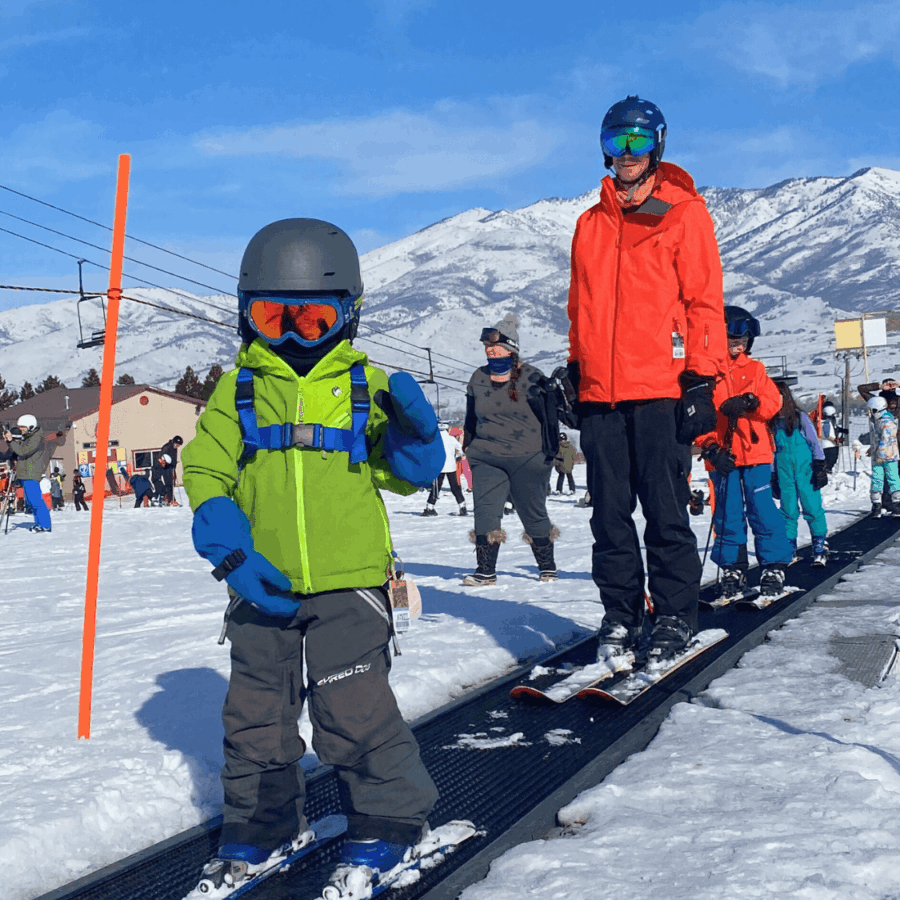
One of the biggest surprises for families new to spring skiing is the snow. Here in the Rockies, March and April often bring some of the deepest snowpack of the entire season. You’re not dodging rocks or hunting for patches of white. What you get instead is soft, forgiving snow that is genuinely easier for children learning to ski to navigate than the hard, icy conditions that show up mid-winter.
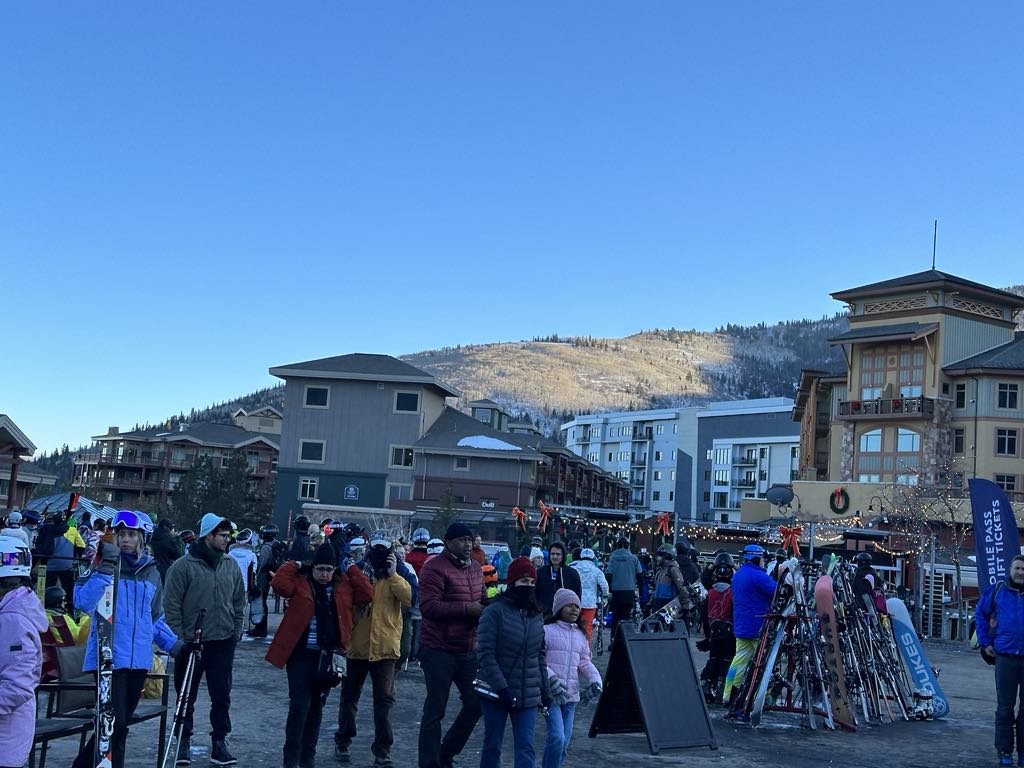
The crowds are also a factor that doesn’t get talked about enough. Christmas break and winter weekends bring serious traffic to most resorts. Spring thins all of that out considerably. Shorter lift lines, more space on the runs, less chaos in the lodge. For a ski parent trying to keep kids calm and confident, that breathing room matters.
What to Do Differently for Spring Skiing
Spring skiing is not complicated, but it does require a slightly different approach than a January trip. Here’s what actually makes a difference:
- Start later in the morning. Spring nights are still cold, which means early morning slopes can be icy and crusty. Icy spring snow is one of the hardest conditions for kids to build confidence on. Our family aims for around 10 a.m., when the sun has had time to soften things up. A child whose first run of the day feels controlled is a child who wants to keep skiing.
- Follow the sun. East and south-facing slopes warm up first. Start there in the morning, then shift to north and west-facing runs as the day goes on. You’re chasing the best snow all day long, and your kids will feel the difference.
- Layer for the temperature swing. Spring days can swing 20 or 30 degrees between morning and afternoon. Start with a merino wool base layer, add a lightweight fleece, and put waterproof outerwear on top. Waterproof gloves and snow pants are non-negotiable. Slushy spring snow is wet, and soaked gear leads to cold, miserable kids.
- Put on sunscreen. This one surprises a lot of new spring skiers. The combination of higher sun angle and UV light bouncing off the snow means your kids are far more likely to burn in the spring than in December. Apply before you leave the lodge and reapply throughout the day.
- Get a spring wax. Ski wax is designed for specific snow temperatures. Mid-winter wax drags on warm spring snow. A quick trip to the ski shop for a spring wax costs about $15 and makes a noticeable difference in how the skis feel, especially for kids who are still developing their technique.
Don’t Skip the Ski Day Tailgate Party
One of the great joys of spring skiing with kids is the parking lot tailgate scene. Bring a thermos of hot chocolate, pack a real lunch, and eat at the car. The atmosphere is festive, the food is cheaper than anything in the lodge, and your kids will remember it. Let them dress up in costumes if they want to. Spring skiing is the one time of year where a kid skiing in a dinosaur suit is completely normal.
Key Takeaway
“Enjoyment is what creates skiers for life. That mountain in March, with your kid in a cape, eating soup out of a thermos, smiling in the sunshine after their best run of the season? That’s what all of this is for.”
Resources and Links
Getting your family ready for a spring ski trip? Here are a few resources from skiingkid.com to help you prepare:
- Best Waterproof Gloves and Mittens for Kids
- Best Waterproof Snow Pants for Kids
- Best Ski Lunch Ideas for Families
And if you’re ready to go beyond spring tips and get a complete plan for teaching your child to ski from the very beginning, check out First Tracks: A Parent’s Guide to Teaching Kids to Ski at skiingkid.com.

Skiing with Kids Podcast Transcript
Welcome to Skiing with Kids. I’m your host Jessica, a ski instructor, mom of five, and someone who’s seen just about every ski day meltdown that you can imagine. After 20 years of teaching kids on the mountain, I’ve learned that great ski days aren’t about perfect technique. They’re about confidence, connection, and knowing what actually works. And this podcast is where we break it all down.
Today I want to talk to you as someone who has very strong opinions about what time of year is actually the best time to take your kids skiing. And today I’m going to tell you exactly what that is. It’s spring. Truthfully, it’s not even close. I know that might surprise some of you. I think a lot of families think that ski season is a December through February thing, but if I could pick only one time of year to ski with young kids, it would be spring every single time. And by the end of this episode, hopefully I’ve convinced you to feel the same way. Let’s chat.
Now let’s talk about why spring changes everything. Spring skiing, especially in the Rockies, is not slush fest survival mode. In fact, it’s often some of the best snow of the entire season. The snowpack at elevation is typically deepest in March and the beginning of April. You’ve got good coverage, warmer air, usually softer snow and sunshine on your face, and those things are all the norm. Now I also say this a bit tongue in cheek because as I’m recording this, we are in March of 2026 and we are having the worst snow year in Utah history. It actually is a slush fest right now, and our early March skiing feels more like conditions typically are at the end of April. Temperatures in Utah this year are about 20 to 30 degrees warmer than normal, and truthfully, I can’t remember a year that’s been this bad here in my entire life. So I still fully stand behind my premise that spring skiing is the best, and hopefully where you ski, conditions are much better than what most of the Rockies are experiencing this winter.
Barring all of the conditions that are going on right now, I still want to convince you — because you might not have a spring skiing trip planned right now, but I do want you to think ahead. Because even if you’re not skiing this spring, you should be skiing next spring. Here’s the thing. During spring, the whole vibe of the mountain shifts. There’s a party energy to spring skiing that I love, especially with kids. Everyone’s out there happy, they’re celebrating, and they’re ringing out every last drop of the ski season — and your kids are going to feel that. They’re also going to feel that in the temperature, in the snow under their skis, in the crowd energy.
And that’s something that’s genuinely underrated. Spring is less crowded than Christmas and winter break, sometimes dramatically less. There are typically a few days in there where everyone’s on spring break and you don’t want to ski those three days. But once that overall crowd thins out, you get considerably fewer people in March and April, which means shorter lift lines, less crowded runs, and definitely less chaos in the lodge. And for kids, all of that actually really matters. In a normal ski year, we regularly plan midweek spring ski days where we just pull our kids out of school — and I’m saying that without any guilt, because the conditions are ideal. We want our kids to ski then.
Now, how do you prepare for spring skiing? Because it does require a slightly different approach than a midwinter ski trip. If you show up without adjusting, you’re going to have a harder day than you need to. So let’s talk about what actually matters.
First, choose your spring skiing destination wisely. This is the most important thing I can tell you before you even book a trip. Not all resorts are created equal in the spring. Lower elevation or warmer climate resorts may have lost significant snow coverage by March, which means patchy runs, exposed rocks, and that dreaded grass poking through. It’s not a good experience for kids, especially when they’re trying to build confidence. Stay at higher elevation resorts in the Rockies — Colorado, Utah, Idaho, Wyoming, Montana — and in Canada. Check the resort snowpack totals starting in January so you can track whether they’re above or below average. It also helps to check their traditional closing date. Arapahoe Basin in Colorado sometimes stays open until July 4th. Ten minutes of early season homework can honestly save your family ski trip in March.
Next, think about timing your day. You do not want to rush to be the first one on the lift in the spring. I know every ski parent instinct says get there early, maximize your day, get your money’s worth. But here’s the thing — spring nights are still cold, which means the snow and slush freezes overnight. Early morning slopes can be really icy and crusty, and for kids, that is one of the hardest conditions to build confidence in. If the first run of the day is hard for your kids on that slick spring snow, they’re going to feel out of control. And once that gets set early, it can really be an uphill battle from there. Our family typically starts skiing around 10 a.m. on spring days. That gives the sun time to work on the snow for a couple of hours. By then any ice has softened, and your kid’s first experience of the day is “I’ve got this” instead of “this is terrifying.” Start later. You’re not losing the day — going a little later actually protects it.
You also want to follow the sun. East-facing and south-facing slopes warm up first, so start there. As the day goes on, shift to north-facing slopes and eventually to the west-facing runs. You are chasing the best snow conditions on the mountain all day by skiing where the sun hits. For kids, the difference between warmed, softened spring snow and shaded icy terrain is enormous. Take a look at the trail map — most will indicate slope aspect. Take five minutes to plan your day accordingly. Your kids will feel the difference even if they can’t tell you why.
When you go spring skiing, you also need to be really aware of how you’re dressing, because there can be a huge temperature swing during the day and it’s often unpredictable. I’ve had days that started at 18 degrees and hit 45 by the afternoon. I’ve also had days that started out fairly moderate and then a crazy spring storm rolled in at noon. That variability can feel annoying when you’re trying to prepare, but it’s part of the magic — you just never know exactly what to expect. You do have to dress for it though. Layers, layers, layers. Quality base layers, a lightweight mid-layer — though if your kid has an insulated jacket they may not need a mid-layer at all, mine typically don’t in spring — and then something waterproof on top. If your kid has a shell, a lightweight fleece underneath is great. If they have a full insulated coat, just go with a lightweight base layer underneath.
Here’s the critical spring detail that parents often neglect: spring snow is really wet. If your kids’ gloves or snow pants are not truly waterproof, you’re going to know before lunch because your kid is going to be soaked. Cold, wet hands never produce happy kids — I’ve seen it over and over again. Take the time to re-waterproof your gear with Nikwax before your trip. It’s also worth carrying a backpack with extra layers, sunscreen, snacks, a spare pair of gloves, and lip balm with SPF. The mountain is going to change throughout the day, and if you’re ready to change with it, things will go much smoother.
Sunscreen is not optional in the spring — I want to shout that from the rooftops. You are more likely to get a sunburn skiing in the spring than almost any other time of the year. The sun’s angle is higher, the UV is more intense, and it’s bouncing right off the snow and reflecting into your kids’ faces. They’re getting hit from above and below at the same time. People underestimate this constantly, and I see serious sunburns in the spring. Apply sunscreen before you leave the lodge and reapply throughout the day. Sunscreen sticks are the best because they don’t freeze, they’re compact, and you can just throw one in your pocket. And please, SPF lip balm too. Also keep your goggles on even when it feels warm and weird to wear them — your eyes can genuinely get sunburned from UV reflecting off the spring snow, and it can really affect your vision. I’ve seen it happen and it seems awful. Keep the eye protection on.
Another quick tip: get your skis waxed. Ski wax is temperature specific, and mid-winter wax is going to drag on warm, wet spring snow. When you arrive, take your skis to the shop and ask for a wax. It’s going to cost about $15, takes just a few minutes, and the local wax technicians will know the current conditions and give you the right wax. The difference is immediate. For kids who are still developing technique, skiing on properly waxed skis genuinely makes learning easier.
One more thing you need to factor in: pack your lunch and plan on tailgating at the car. One of my all-time favorite things about spring skiing is the tailgate scene. Around 11 a.m. the parking lot transforms — grills come out, music starts, and what was just a parking lot is now a full-on outdoor party. Instead of fighting lodge crowds, pack your own lunch, bring a good insulated thermos with hot chocolate or soup, pull out chairs and sleeping bags, and eat at the car. This is going to become a core memory for your kids. They’re going to remember the hot chocolate out of the thermos, the hot dogs grilled out of the trunk, the chaos and the music. It’s just a party. And as a bonus, it costs way less than resort food.
Spring skiing is also the time of year when costumes come out on the mountain — and not only are they acceptable, they are celebrated. Tutus, onesies, superhero capes, dinosaur costumes. Let your kids pick a theme and just go with it. The mountain is less intimidating when you’re skiing in a dinosaur costume. It just is. The psychological shift that happens when a kid feels like they’re playing instead of performing — that is worth everything. We’ve passed out candy at the base, gone all matchy-matchy, grabbed wacky outfits from the thrift store. Those are the days your kids are going to talk about for months.
So why does all of this matter? The conditions spring offers — warmer weather, softer snow, fewer crowds, that party energy — create a context where your kids can just have fun on the mountain. They’re not in survival mode. They’re having a great time. And that enjoyment is what creates skiers for life. The families whose kids are begging to go back are the ones who had warm faces, good snow, a crazy picnic lunch, and maybe a mom skiing around in a dinosaur onesie. That’s the memory. That’s what keeps them coming back.
Spring skiing is not a consolation prize. It is the single best time of year to ski with young kids. Once you experience it, you will plan for it on purpose every single year. I grew up doing so much spring skiing — it was my all-time favorite thing to do with my family. Once my parents figured it out, we went every spring break for most of my childhood, and it is one of my best memories.
If today’s episode was helpful, share it with a ski family who needs to hear it. And if you are ready to stop guessing and start skiing with a real plan, you need my course First Tracks: A Parent’s Guide to Teaching Kids to Ski. You can find it at skiingkid.com — just click on the First Tracks tab. Research your resort, start later in the morning, follow the sun, layer up, put on sunscreen, wax your skis, pack lunch, and get a little crazy with what you wear. Because that mountain in March, with your kid in a cape eating soup out of a thermos and rocking out in the parking lot? That’s what all of this is for. I’ll see you out there on the mountain enjoying those spring vibes.