

This post may contain affiliate links where we earn from qualifying purchases from referring you to our favorite products and brands. As an amazon associate, we earn from qualifying purchases. Find out more in our disclosure.
If you’ve ever had a ski day fall apart before lunch and couldn’t figure out why, altitude sickness might be the culprit. It’s one of the most overlooked challenges in skiing with kids, and it can take a perfectly healthy, excited child and turn them into a cranky, headachy mess before they’ve even had a real chance to ski.
As a PSIA-certified ski instructor with 20 years of experience and a mom of five, I’ve watched altitude sickness derail family ski trips more times than I can count. The good news is that with a little preparation, you can dramatically reduce the risk for your whole family.

What Is Altitude Sickness and Why Should You Care?
Altitude sickness happens when you go too high in elevation too quickly. Your body needs time to adjust to lower oxygen levels, and when you don’t give it that time, symptoms can range from headaches and fatigue to nausea, vomiting, and in serious cases, confusion and shortness of breath.
Here’s what most people don’t realize: fitness level has almost nothing to do with it. I got altitude sickness as a teenager while climbing in Colorado. I was active, in great shape, and it knocked me flat. Some people are simply more prone to it than others, and you won’t know until you’re on the mountain.
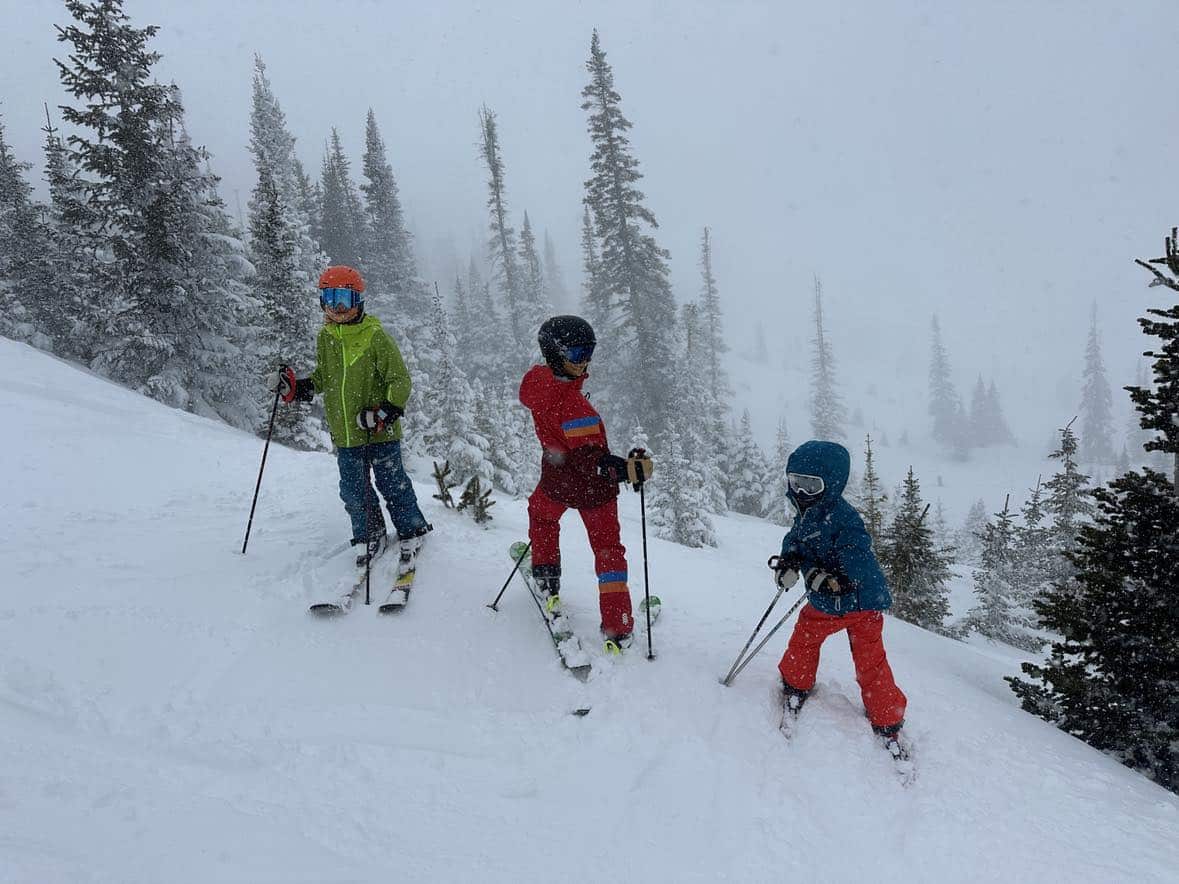
Young children are especially vulnerable. Their bodies are still developing, and they can’t regulate breathing and body temperature at elevation as efficiently as adults. Worse, they often can’t tell you what’s wrong. Symptoms in little ones can look a lot like general fussiness: irritability, poor appetite, trouble sleeping. As a ski parent, altitude sickness should be on your radar any time your young child seems off and you can’t explain it another way.
The Nervous System Connection
This is something I talk about a lot when it comes to children learning to ski: kids don’t just ski with their legs, they ski with their nervous system. When a child’s body is fighting altitude, they’re already dysregulated before they clip into their skis. A dysregulated nervous system can’t learn, can’t take correction, and can’t find joy in hard things. That “I’m tired, I want to go inside” at 10:30am is sometimes not a behavior problem. It’s a physiological one.
How to Prevent Altitude Sickness When Skiing
These are the family skiing tips I come back to every season:
Build in an acclimation day. If you’re flying in from lower elevation, give your family one lighter day before hitting the slopes hard. A walk around town, swimming at the resort pool, or some easy snowshoeing gives your body time to adjust without demanding too much from it.
Hydrate before you feel thirsty. The air at altitude is much drier than most families are used to. By the time you feel thirsty, you’re already behind. Electrolyte mixes can help your body actually absorb and retain fluid. Build regular water breaks into the ski day for your kids, not just at lunch.
Eat small and often. Big meals can make altitude adjustment harder. Consistent snacking on the mountain works better than one large lodge lunch, especially in those first couple of days.
Check any medications with your doctor before you travel, as some can interact with altitude and make symptoms worse.
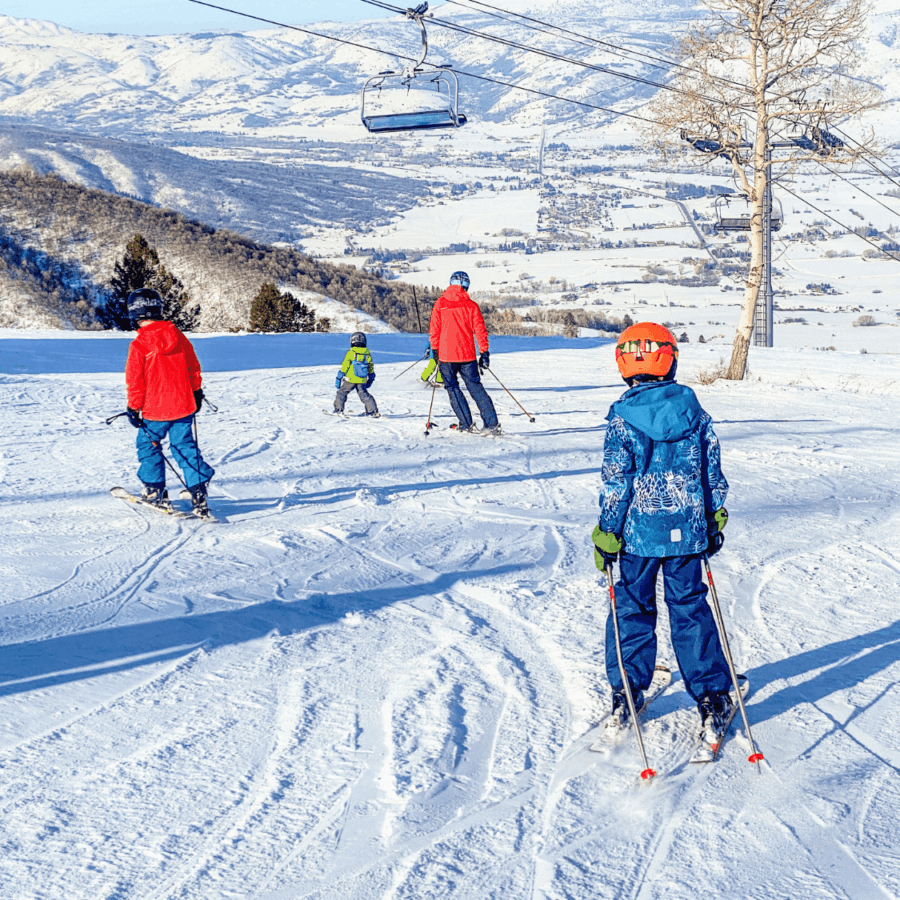
Altitude Sickness Symptom Treatment
Get to lower elevation immediately. Don’t push through it. A child or adult who is dizzy, confused, or struggling to breathe on the mountain is a risk to themselves and others. If symptoms are severe, contact ski patrol right away.
Key Takeaway
“Altitude sickness doesn’t care how fit you are, how excited you are, or how much you paid for your lift tickets. It’s a physiological reality of skiing in the mountains. But with preparation, you can dramatically reduce the risk.”
Resources and Links
Protecting your family at altitude is just one piece of setting up a great ski day. For more practical guidance on how to ski with kids, including gear, terrain progression, and what to do when things go sideways, visit skiingkid.com.
If you’re looking to go deeper on kids ski lessons and what it actually takes to teach kids to ski with confidence, check out these resources:
And if you’re ready for a complete plan, not just surviving the day but building real confidence on the mountain, check out First Tracks: A Parent’s Guide to Teaching Kids to Ski at skiingkid.com. It’s everything I’ve learned in 20 years as a ski instructor and a ski mom, built specifically for parents.
Skiing with Kids Podcast Transcript
Welcome to Skiing with Kids. I’m your host Jessica, a ski instructor, mom of five, and someone who’s seen just about every ski day meltdown that you can imagine. After 20 years of teaching kids on the mountain, I’ve learned that great ski days aren’t about perfect technique. They’re about confidence, connection, and knowing what actually works. And this podcast is where we break it all down.
Today on the podcast, we are talking all about altitude sickness. This is something that can take a perfectly healthy, excited kid or even an adult and turn them into a headachy, nauseated mess all before lunchtime — before they’ve even had a chance to really ski. Now I know what you’re thinking: that’s not us, we’re healthy, we exercise, and we’ll be fine. And I’m here to tell you that’s exactly what the guy I had to call ski patrol on thought too.
Let me tell you the story because it is burned into my memory. I was at the top of the ski lift with my kids when a man approached me asking for directions. Something immediately felt off. He kept repeating himself, his hand was pressed to his head, and he kind of looked like he was in actual pain. I asked if he was okay and he said he just needed to sit down for a minute. So while he sat down, I started talking to him. Turns out he’d flown in from the East Coast that morning, same day, and had gone straight to the resort. We’re in Utah, so we’re at pretty high elevation here, and he said he used to live in Colorado so he figured he’d be fine. He looked pretty young, probably in his thirties, and seemed pretty fit. But the altitude sickness had made him so sick within a few hours that ski patrol had to help him down the mountain.
He obviously lost that entire day of skiing, but he probably lost a few more to recovery as well. These were days he had probably paid for and planned months in advance. And the frustrating part is that so much of it was probably preventable. Maybe not all of it, because altitude sickness doesn’t always play fair, but with a little preparation his body would have at least had a fighting chance.
So today we’re going to talk about what altitude sickness actually is, who is most at risk — and yes, your kids are on that list — and some specific steps you can take before and during your ski trip to protect your family.
Altitude sickness happens when you go too high in elevation too fast. Your body needs time to adjust to lower oxygen levels at elevation, and when you don’t give it that time, things start to go wrong fast. The symptoms can range from something that’s just annoying to something that’s really dangerous. On the mild end, you might experience headache, fatigue, lightheadedness, or loss of appetite. That last one actually matters more than most people think, because it’s a good signal with kids. When your kid suddenly doesn’t want to eat their lunch on the mountain, altitude might be part of the reason why.
Moderate symptoms add nausea and vomiting. Severe symptoms include shortness of breath, confusion, and in serious cases, unconsciousness. Here’s the rule I want you to remember: any symptom of altitude sickness is your body telling you to slow down and get to lower elevation. Do not push through it. I’m speaking from personal experience — it will only get worse. Don’t tell yourself you’ll feel better after one more run, because I promise you’ll feel worse. Just get down and start taking it easy.
Now let’s talk about who is most at risk. Anyone can get altitude sickness, and I want to say that clearly because I have seen it humble the fittest people on the mountain. I personally first got altitude sickness when I was a teenager. I was a very active kid, in great shape, climbing a fourteener in Colorado, and it knocked me flat. I’ve experienced it many times since, and I’ve come to understand that some people are just more prone to it than others. I am clearly one of those people. It has very little to do with fitness level — in fact, most of the times I’ve gotten altitude sickness were times when I was in incredible shape.
But there are two groups that need extra attention: young kids and older adults. Kids’ bodies are still developing. Their systems for regulating breathing and body temperature at altitude aren’t as efficient as in adults. And here’s the tricky part with kids: they can’t always tell you what’s wrong. Symptoms in young kids often look like something else entirely. They could be really irritable, have a poor appetite, have trouble sleeping, or be vomiting. A parent might think their toddler is just overtired or coming down with a bug or being difficult. If your baby or young child seems off at altitude and you can’t explain it another way, altitude sickness needs to be on your radar.
Here’s where this connects to something I talk about a lot on this podcast: kids don’t just ski with their legs. They ski with their entire nervous system. When your child’s body is fighting altitude, their nervous system is already under stress before they even clip into their skis. They’re not just physically depleted — they’re dysregulated on every level. And a dysregulated nervous system can’t learn, can’t take correction, and isn’t going to have any fun. That “I’m so tired, I want to go inside” at 10:30am? Sometimes it really is the altitude, and no amount of encouragement or gummy bears or hot chocolate breaks is going to fix a physiological problem.
This is why I want you to take altitude seriously as part of your ski trip preparation — not just as a health issue, but as a performance issue. You do all this work to set up great ski days for your family, and altitude sickness can sneak in and quietly undermine every single bit of it.
Now let’s talk about what you can actually do to prevent it, because this is the part that matters most.
Step one: build in an acclimation day. If you’re flying in from sea level or lower elevation, your body needs time to adjust. I know you’re on a ski trip and you want to ski every possible day. I get it. But one lighter day of activity when you first arrive can save you from losing two or three or more days to sickness. On that first day, stay moderately active at a lower elevation. Walk around town, swim at the resort pool, go snowshoeing. Let your body quietly start adjusting without demanding a lot from it.
Step two: hydrate like it’s your job. The air at altitude is significantly drier than what your body is used to. You’re losing moisture with every breath, and because it’s cooler on a ski trip, you often don’t feel as thirsty as you should. By the time you feel thirsty, you’re already behind. Drink water consistently throughout the day. I personally see massive benefits from electrolyte mixes, especially on ski trips. My current favorite is Relight — I drink it every day, but especially when I know I’m going to be really active. It helps your body absorb and retain fluid rather than just running straight through you. Start hydrating a day or two before you even leave for your trip. And this applies to kids too. Kids are often worse at recognizing their own thirst, so build in regular water breaks both on travel days and once you’re on the mountain. I recommend carrying a small collapsible water bottle in their jacket pocket — it makes taking breaks easy and turns it into part of the routine without always having to go inside.
Step three is for the adults: watch your alcohol. I know apres ski is fun and I don’t want to take that away from you. But alcohol dehydrates you and it intensifies altitude sickness symptoms significantly. If you’re in your first day or two at elevation, take it easy. Your body is already working hard enough to adjust.
Step four: eat small and often. Big meals can actually make altitude adjustment harder on your body. Instead of one or two large meals, try eating several smaller ones, especially those first couple of days. This helps your body manage energy without overloading your system while it’s still adapting. For kids, this looks like consistent snacking on the mountain rather than holding out for a huge burger and fries lunch — which honestly is good advice for keeping energy high for skiing in general.
Step five: check any medications with your doctor before you leave. Some medications can make you more susceptible to altitude sickness, and it’s good to know that ahead of time. There are prescription medications that can help with altitude sickness, though most are typically used at elevations higher than ski resorts. If you have concerns or fall into a higher-risk group, definitely have that conversation with your doctor before your trip.
Sometimes you can do everything right and altitude sickness still shows up, because bodies are unpredictable. Here’s what to do.
Get to lower elevation immediately. This is the first and most important step. Even a few hundred feet of descent can start to make a difference. If you’re on the ski hill and symptoms hit, ski down to the bottom. Don’t take the gondola to a higher peak and try to power through it — it will get worse. I’m speaking from personal experience.
Once you’re lower, hydrate and rest. Getting to a lower elevation and drinking plenty of water and electrolytes is often enough for mild symptoms to ease. After a nap or a good night’s sleep, your body may be ready to go again the next day. Don’t push through it. I have watched people try to gut it out on the mountain with altitude sickness and it does not work. Your symptoms will get worse, not better. And if you’re dizzy or confused on your skis, you’re not just a risk to yourself — you’re a risk to everyone around you.
If symptoms are severe — shortness of breath, confusion, inability to walk — call ski patrol immediately, just like I had to at the beginning of this episode. Don’t try to manage that on your own. Left untreated, altitude sickness can turn into days of misery and in some cases require real medical attention. It can wreck an entire ski vacation. But caught early and treated properly, most people bounce back pretty quickly.
I’ve lived in Utah and Colorado for most of my life, and I see altitude sickness hit visitors every single season. And every season I see the same mistake: people underestimate it because they feel fine when they land at the airport. Altitude sickness is sneaky. It often doesn’t fully hit until you’ve been active at elevation for a few hours. You feel okay in the morning, you’re excited, you push hard — and by noon it’s catching up with you, because as you get more active, your body needs more oxygen.
The families I’ve seen navigate it best are the ones who plan for it. They arrive a day early. They keep a water bottle in every jacket pocket. They use electrolytes. They check in with their kids on the mountain not just about how their skiing is going, but about how their body is feeling. And that last part is especially important for younger kids who can’t always articulate what’s wrong.
As a mom, I can tell you that when one of my kids starts feeling off at altitude, the whole dynamic of the ski day changes. They’re more emotional, less resilient. Falls they’d normally brush off become meltdowns. Everything gets harder. When you protect your family’s bodies at altitude, you’re protecting your ski day. You’re protecting their experience. You’re protecting their relationship with the sport.
Here’s what I want you to take away from today: altitude sickness doesn’t care how fit you are, how excited you are, or how much you paid for your lift ticket. It’s a physiological reality of skiing in the mountains. But with preparation, you can dramatically reduce the risk. Build in an acclimation day if you can. Hydrate consistently before, during, and after skiing. Watch for symptoms in your kids, especially since they often can’t tell you what’s wrong. And if symptoms show up, take a break, get lower, and don’t fight your body. Work with it.
The mountain will be there tomorrow. And the kid who feels good on the mountain is the kid who’s going to want to come back again and again. That is worth everything you’re putting into this trip.
If you found this episode helpful, share it with a ski family heading to the mountains for the first time. It could save their trip. I’ll see you out there on the mountain.