

This post may contain affiliate links where we earn from qualifying purchases from referring you to our favorite products and brands. As an amazon associate, we earn from qualifying purchases. Find out more in our disclosure.
Why is Stopping at the Right Time Building Faster Progress Than Skiing Longer?
Most ski parents are trying to get more out of their ski days. More runs. More vertical. More progress. It makes sense, lift tickets are expensive, the drive is long, and you want to feel like the day was worth it.
But here’s what 20 years of teaching kids to ski has taught me: the parent who stops early is almost always the one raising a lifelong skier. And the parent who squeezes in one more run? They’re often the one rebuilding their kid’s confidence the following season.
This is what we dig into in this week’s episode of Skiing with Kids.
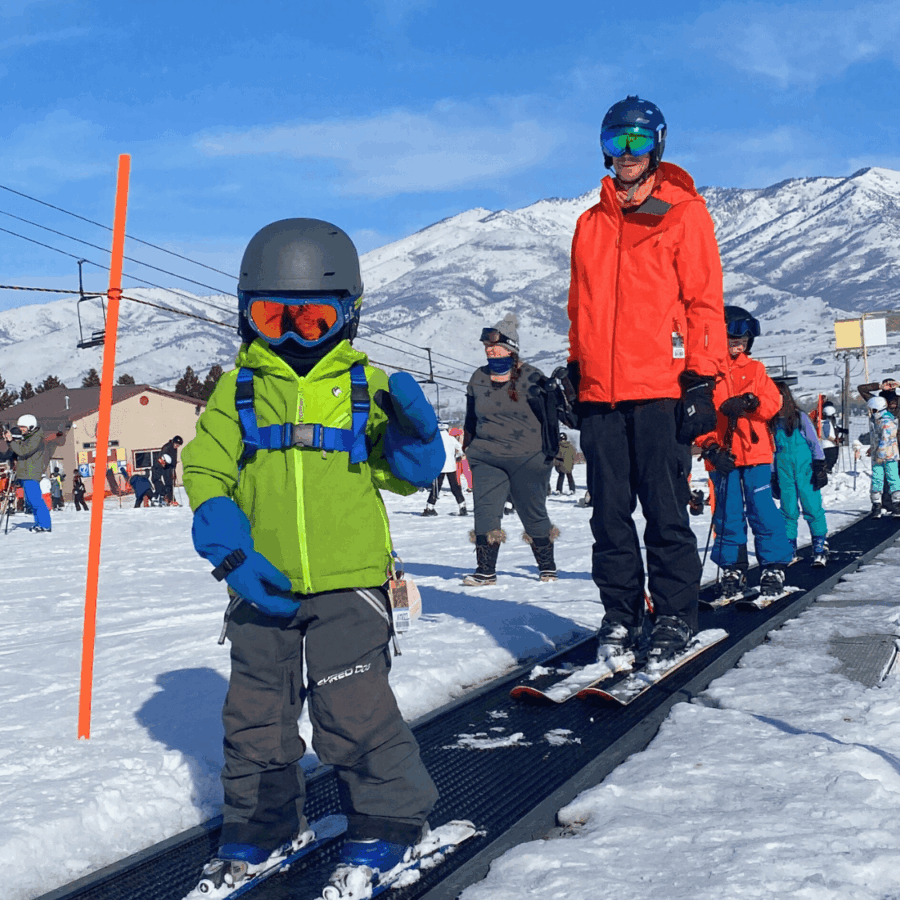
A Kids Last Ski Memory Is the Strongest
There’s a psychological principle called the Peak-End Rule, and once you understand it, you cannot unsee it. The basic idea is that we don’t remember experiences as an average of every moment. We remember the emotional peak and how it ended. Everything in the middle blurs.
For a ski parent, this is huge. It means your child’s memory of the ski day is being written in the final 30 minutes. If those last 30 minutes are a struggle, a fall on tired legs, or a meltdown at the base of the mountain, that becomes the story their brain files under “skiing.”
But if you stop while they are still smiling, still wanting more? That feeling becomes the memory. And wanting more is exactly what you want them carrying into next weekend.
What Running Out of Gas Looks Like While Skiing with Kids
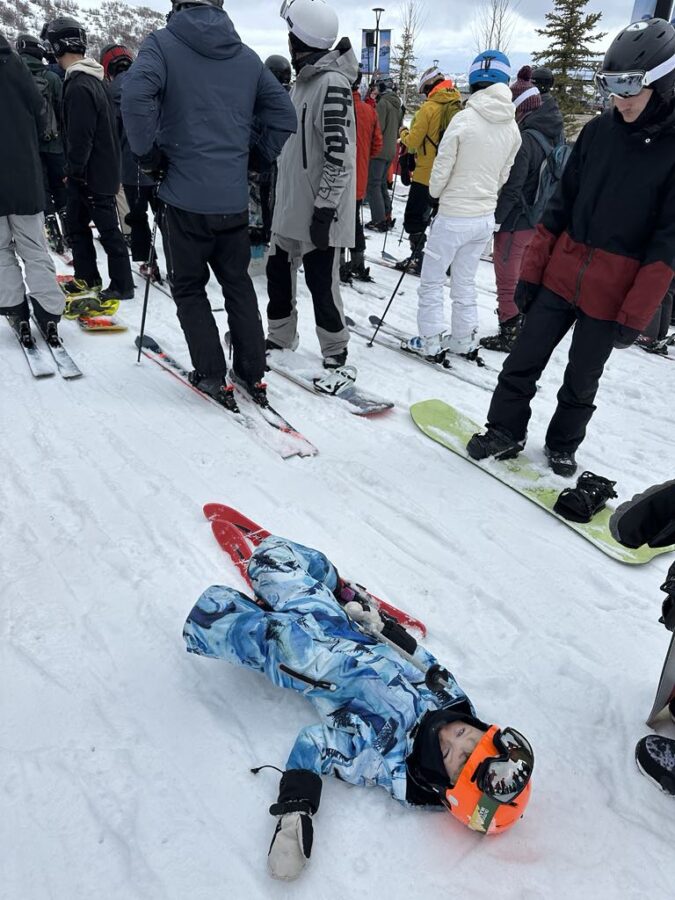
Here is the part most parents miss. When kids hit their limit on the mountain, it rarely looks like tiredness. It looks like defiance. Sudden complaints. Falls that seem to come from nowhere. A kid who was having the best day an hour ago who is now picking a fight about their goggles.
That is not a behavior problem. That is a nervous system that has hit its ceiling. And if you push through it, you are not building toughness. You are building a negative association with the sport.
As a ski instructor, I see this pattern constantly in kids ski lessons and family ski days alike. The children learning to ski who make the fastest progress are almost never the ones who skied the longest. They are the ones whose parents learned to read the signals and stop before the wheels came off.
How to Use This When Skiing with Kids
Before your next ski day, make a decision in advance: you are going to stop while they are still having fun. Not when they are done. While they are still enjoying it.
End on a run where they felt good and in control. Let them be the one protesting that they want to keep going. That protest is worth more than any extra run, because it means they are chasing the sport instead of being dragged through it.
Then pay attention to the car ride home. Are they talking about what they want to try next time? That is your green light. That is a day that went the way it was supposed to go.
These are the kinds of family skiing tips that don’t show up on resort websites or in the lift ticket price, but they are the difference between a kid who skis for a season and a kid who skis for life.
Key Takeaway
“Leave them smiling. Leave them wanting more. That’s the whole game.”
Want to Ski With Less Chaos?
If you are figuring out how to ski with kids and want a real plan behind your days on the mountain, First Tracks: A Parent’s Guide to Teaching Kids to Ski is built exactly for this. It walks you through how to structure your ski days, read your kids’ signals, and build the kind of experience that keeps them coming back. Find it at skiingkid.com.

Resorces & Links
Going deeper on any of these ideas? These articles are worth your time:
- How to Make Your Child’s First Day on Skis a Success
- Why Kids Need Flat Ground Time Before the Lift
- Signs Your Child Is Ready to Move Up to the Next Terrain
Skiing with Kids Podcast Transcript
Welcome to Skiing with Kids. I’m your host Jessica, a ski instructor, mom of five, and someone who’s seen just about every ski day meltdown you can imagine. After 20 years of teaching kids on the mountain, I’ve learned that great ski days aren’t about perfect technique. They’re about confidence, connection, and knowing what actually works. And this podcast is where we break it all down.
Today I want to talk about something that feels a little counterintuitive as a parent, but I think it’s really going to change the way you approach every single ski day with your kids. It’s about stopping. Not quitting, not giving up, not letting your kids run the show — but knowing exactly when to stop for the day and having the discipline to actually do it. Because let’s be honest, we can know things, but executing on them is a different story. And this one thing is one of the most powerful things you can do for your child’s long-term relationship with skiing.
Here’s the logic most ski parents operate on, and I completely understand it because I’ve felt it too. We drove far, we paid a lot of money, we got up early, and we are going to get every possible run out of this day. That makes total sense as an adult. We want value. We want to feel like our investment — our time, our money — was worth it. But here’s what that math misses entirely: your kid’s brain is not keeping score of vertical feet. It is keeping score of how skiing felt. And when we push past the point where skiing felt good, when we squeeze in one more run on tired legs with a bad mood right there, we are not adding to the positive ledger. We are subtracting from it.
The last memory of the day is often the strongest memory. And if that last memory is a meltdown going up the chairlift, a fall they were too tired to recover from, or tears in the parking lot, that is what their brain files under skiing. That frustration sticks with them. And then we wonder why they don’t want to go back.
I’ve talked in a previous episode about how kids don’t just ski with their legs. They ski with their whole body, with their nervous system. When their nervous system is calm and regulated, they learn fast, they try new things, and they will surprise you with what they can do. But there’s a flip side to that, and I really want you to understand it today.
Think of your kid’s nervous system like a daily budget. A limit. And when they go skiing, they spend it really fast. Think about everything that’s happening for your child on a ski day: cold temperatures their body is constantly fighting against, the physical demands of balancing and turning on an unstable slippery surface, new sensory input everywhere — speed, noise, crowds, altitude — and emotional regulation when things feel scary or hard. That is a lot. Their tank drains faster than you think.
The tricky part is that the warning signs of a tank running low don’t always look like tiredness. They look like irritability. Defiance. Sudden declarations that skiing is stupid. Falls that seem to come out of nowhere. A kid who was having an absolute blast an hour ago who is now fighting you about putting their gloves back on. These are not behavioral problems. This is a nervous system that has hit its limit. And if you push through it — if you insist on one more run — you are not building resilience. You are building a negative association with the sport.
There’s a well-known psychological principle at work here that I think every ski parent should understand. It’s called the Peak-End Rule. The basic idea is that we don’t remember an experience by averaging out every moment of it. We remember how it felt at its peak — the highest emotional point — and how it ended. Everything in the middle kind of blurs together. So if your kid has an amazing morning with great runs, big smiles, and real confidence, but the last 30 minutes are a struggle or a fight or tears, their memory of that day is going to be skewed toward the ending. Even though 90% of the day was great, all they’re holding onto is the hard part at the end.
Now flip it around. If you stop while things are still good — while your kid is still smiling and actually wanting more — that feeling of wanting more becomes the memory. And that is exactly what you want them carrying into the car, into next week, into next season. The goal isn’t the most runs. The goal is the best last memory you can give your kids. And most of the time, those two things don’t coincide.
So what does this actually look like in practice? I cover this extensively in my course, First Tracks: A Parent’s Guide to Teaching Kids to Ski, but here’s what I do with my own kids.
Watch for the window, not the meltdown. The right time to stop is before the meltdown, not after. There’s almost always a moment where things are still good, your kid is still engaged, but you can feel the edge approaching. Maybe their turns are getting a little sloppy. Maybe the complaints have ticked up. Maybe they’ve stopped initiating and they’re just following along. That window is your cue. End there.
End on a win, not on one last run. The last run of the day should be one where they felt good and in control. It doesn’t have to be their best run ever — just one where they felt capable and confident. If you’re going to give them one more, make it an easy one. Set them up to finish strong.
And here’s my favorite part: let them be the one who wants more. When you stop early and your kid protests — when they say “Mom, why do we have to leave? I love skiing, I just want one more run” — something powerful just happened. They just told their brain that skiing is something they want to do. They are chasing it rather than being dragged into it. That internal motivation is worth more than any extra run you could have gotten.
As your kids get older, you can start giving them language to self-regulate. Ask them: “How’s your energy on a scale of one to five?” or “Do you want one more run or are you ready for a break?” Giving kids ownership over that decision builds body awareness and emotional intelligence. It also takes the pressure off you being the one to always pull the plug.
I also want to make sure you have realistic expectations for how long kids can actually ski. Just the other day I was out with my nieces — they’re two and four, the cutest little things — and they absolutely love skiing. But like most kids their age, they don’t last very long. My two-year-old niece was ready to go in after about 45 minutes. Her four-year-old sister could go for about an hour and a half before needing a real break — not a quick snack break, but a full 30 to 60 minute reset before she was ready to try again. When my own kids were small and learning, my formula was two parts hot chocolate break to every one part skiing. They got a lot of hot chocolate. But they also learned that skiing was fun.
Once you’ve listened to your kids’ cues and left before the meltdown, pay attention to what they say in the car on the way home. If they’re talking about what they want to try next time, asking when they can go again, replaying the fun moments from the day — you’ve won. You’ve left them wanting more. Their nervous system got to process the experience from a place of success rather than exhaustion.
If they’re silent and slumped, fall asleep before you leave the parking lot, or say “I’m never going skiing again” — those are signals too. Not character flaws, just information. The tank ran dry before you stopped. At that point, address it soon — not in the moment when everyone’s frustrated, but within the next day or so, before it settles into a negative memory. And if your kid is somewhere in the middle, ask them: what was your favorite run today? What are you excited to try next time? Model the habit of ending the ski day focused on the good things.
I want to be honest with you — this is not easy. There have been so many beautiful bluebird powder days where I’ve made myself pack it up earlier than I wanted to because I could see one of my kids starting to unravel. With five kids, sometimes that just means we’re going to the car, we’re taking boots off, and we’re reading stories. Or we go to the lodge, we get hot chocolate, we take our coats off, and we call it. And every time we leave early, I know it was the right call. Even when my ski-obsessed soul really wanted to stay.
The days I’ve pushed through? I’ve regretted most of them. Every single time, without exception, we paid for it — in the parking lot, in the car, sometimes in a kid’s attitude toward skiing for an entire month. A few seasons ago, my son — who had been a confident skier — started saying he didn’t like skiing anymore. When I looked back honestly at what had happened, I realized we’d had several days in a row where I’d pushed a little too hard. His older siblings were doing great and I convinced myself one more run was fine. I was prioritizing my agenda over what his body and brain were telling me. We spent most of the following season rebuilding his confidence from scratch. One more run is never just one more run if it costs your kid their confidence in the sport.
Here’s what I want you to hold onto from this episode: we are not just trying to teach kids to ski. We are trying to build a relationship between your child and the mountain. That relationship takes years to develop, and like any good relationship, it can be strengthened or strained by the experiences you have together. Every day that ends with your kids smiling and wanting to come back is a deposit. You are building a skier for life. Every day that ends in exhaustion or tears or conflict around skiing is a withdrawal. Enough withdrawals and that account closes. Stopping at the right time is not giving up. It is investing in every ski day that comes after this one.
Before your next ski day, make a decision in advance: you are going to stop while everyone is still having fun. Not when the chairlifts shut down, not when they’re done — while they’re still enjoying it. Watch what happens in the car on the way home. Watch what happens when you ask if they want to go again next week. I think you’re going to be pleasantly surprised.
The most successful ski parents I’ve worked with over 20 years aren’t the ones who skied the most days or covered the most terrain. They’re the ones who figured out how to leave their kids wanting more every single time. That one thing is what produces lifelong skiers. Not mileage, not pressure, not one more run.
Leave your kids smiling. Leave them wanting more. That’s the whole game. I’ll see you out there on the mountain.