

This post may contain affiliate links where we earn from qualifying purchases from referring you to our favorite products and brands. As an amazon associate, we earn from qualifying purchases. Find out more in our disclosure.
Most ski parents are focused on the wrong thing. They’re thinking about which runs to hit, how many lifts they can squeeze in, whether their kids are progressing fast enough. But after 20 years as a ski instructor and mom of five, I can tell you the thing that actually makes or breaks a ski day happens before any of that.
It’s the first hour.
The first 60 minutes on the mountain sets the tone for everything that follows — and this is true whether your child is on skis for the very first time or has been skiing for years. Get the first hour right, and the whole day flows. Rush it, and you’ll be fighting an uphill battle until someone asks for hot chocolate and means it.
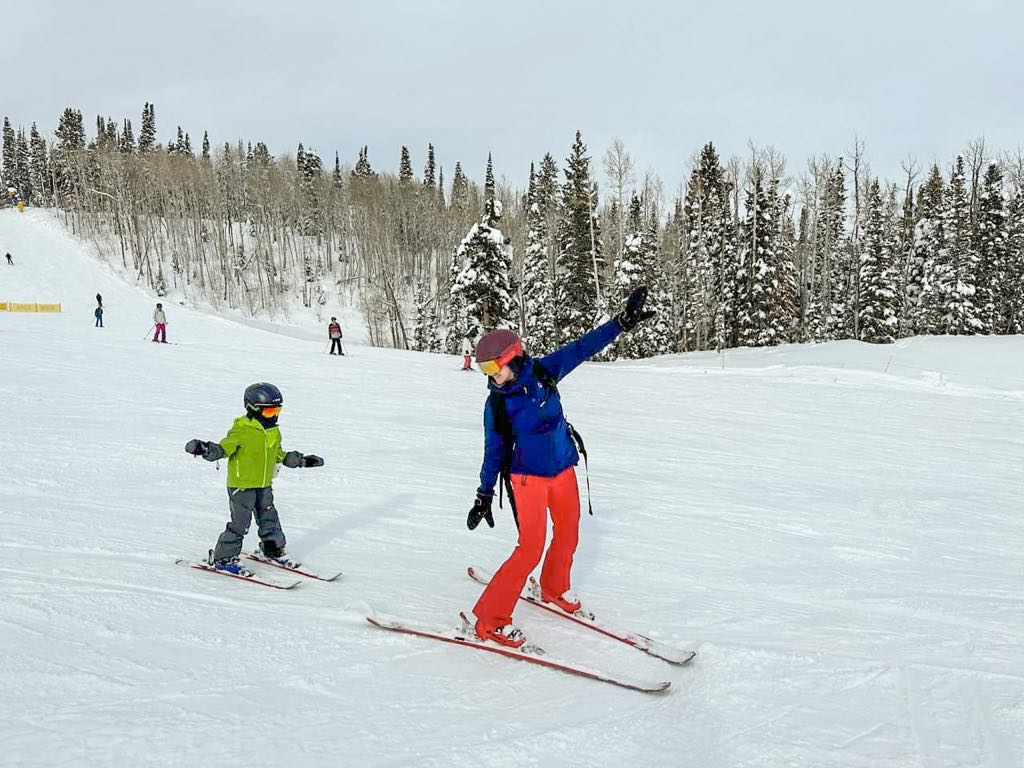
What Most Ski Parents Do Wrong When Starting Out
Here’s how most family ski days start: you’ve woken up early, you’re already stressed about traffic and lift ticket prices, and by the time you’ve unloaded all the gear someone is cold, someone lost a mitten, and someone is saying they don’t want to ski.
So we rush. “Come on, we paid a lot for this, let’s go.”
That one move — that pressure — sends a clear signal to your kids. This is high stakes. You need to perform. And kids pick up on that energy instantly. The moment you tighten up, they tighten up. This is true at every age, from a nervous five-year-old to a confident twelve-year-old who suddenly can’t find their skiing legs.
Kids Ski With Their Nervous Systems
This is the core of everything I teach as a PSIA-certified ski instructor: kids don’t just ski with their legs. They ski with their nervous systems. When they’re regulated and calm, they learn fast, take risks, and surprise you. When they’re overloaded — from cold fingers, a rushed morning, or anxiety they picked up from you — they shut down.
The hard part is that this overload usually happens before the first run. By the time they click into their bindings, the damage is already done. The meltdown at noon started 45 minutes ago in the parking lot.
“Success early creates momentum. Momentum carries the day.”

The First Hour Framework for Skiing with Kids
Here’s the simple structure I use with my own kids and in my teaching. It applies no matter where your child is in their skiing journey.
Parking Lot Energy Check. Before boots go on, check yourself. Are you rushed or stressed? Your kids feel it. Slow your voice down, drop the pressure talk, and set a calm tone before anyone steps on snow.
Gear Comfort Audit. Boots snug but not crushing? Hands warm? Goggles sitting right? Physical discomfort turns into emotional meltdowns fast. Fix it in the lodge, not on the hill. If you’re still figuring out kids ski lessons and gear, this step matters even more.
Intentional Warm-Up. For beginners and young children learning to ski, this means flat ground first — boot walks, one-ski glides, simple games. For your intermediate or advanced skier, it means starting one level below their best. A warm-up groomer before the moguls. An easy blue before the blacks. The principle is the same at every level: don’t skip the warm-up. You wouldn’t send any athlete straight into peak performance without it.
A Confidence-Building First Run. Match the first run to where your child is today, not where they were at their best last season. And end it while they still want more. Ending on a win is one of the most powerful tools you have as a ski parent.
Not sure if your child is ready to push to harder terrain? Here are five questions to help you decide.
Why This Works at Every Level of Skiing
When you protect the first hour, kids improve faster, take more runs, and build the kind of independence that comes from real confidence. And you stop managing meltdowns and actually start skiing together.
This is one of the core principles inside First Tracks: A Parent’s Guide to Teaching Kids to Ski — not just drills and technique, but how to structure the day so your kids can actually succeed. Because skiing with kids isn’t about talent. It’s about strategy.
Resources and Links
- First Tracks: A Parent’s Guide to Teaching Kids to Ski — the complete course for ski parents at skiingkid.com
- Getting the Most Out of Ski School for Kids
- Are Your Kids Ready to Ski Harder Terrain?
- 7 Mistakes Every Ski Parent Makes
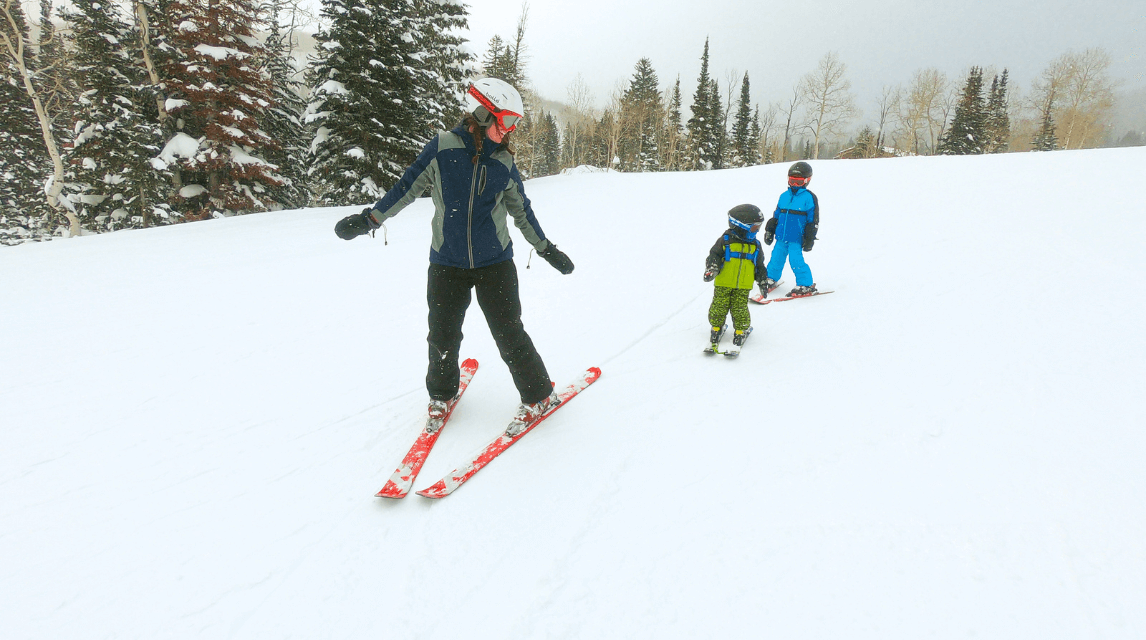
Skiing with Kids Podcast Transcript
Today we are going to talk about the most important part of your ski day, and it’s also one of the most difficult for parents. And it doesn’t matter if your kid is on skis for the first time or has been ripping groomers since they were four. Today I’m speaking as someone who has spent way too many cold mornings in resort parking lots figuring out why some ski days go great and others fall completely apart before 10am.
This magical moment is the first hour of the ski day.
Not the whole day. Not the last run. Not how many vertical feet you log.
The first hour.
I genuinely believe the first 60 minutes on the mountain determines about 80% of how your ski day is going to go. And if you’re skiing with kids? It determines almost everything.
Once you see this, you will not be able to unsee it. Let’s get into it.
I’ve taught terrified four-year-olds, confident teenagers, stubborn middle schoolers, kids who cry in the parking lot, and kids who lap the lift until they shut it down.
And there is one pattern that shows up again and again, at every single level:
If the first hour feels rushed, chaotic, or overwhelming, the entire day spirals.
But if the first hour feels calm, purposeful, and controlled? The day flows and the fun can start.
Most parents don’t even realize they’re sabotaging that first hour. The decisions they’re making in the parking lot, in the lodge, on the walk to the snow, those decisions are setting the entire tone for the day. Whether your kid is a beginner or an advanced skier.
You wake up early, already a little stressed. You’re checking the weather, thinking about traffic, doing the math on lift tickets. You unload everything: boots, helmets, gloves, snacks, goggles, skis, poles. The full circus.
Someone’s cold. Someone can’t find a mitten. Someone has to pee. And someone says “I don’t want to ski.”
And what do we do?
We rush.
“Come on. Hurry up. We paid a lot for this. Let’s go.”
And without realizing it, we send a very clear message: This is high pressure. You need to perform.
Kids read that instantly. The second you tighten up, they tighten up. The second you start pushing, they start resisting.
It doesn’t matter if they’ve never skied before or if they’ve been skiing for ten years. That dynamic plays out the same way.
And then parents say “I don’t know why they’re being so difficult today.”
I do. I’ve watched it happen a thousand times. But usually we don’t notice it in ourselves in the moment.
Here’s the heart of everything I teach:
Kids don’t just ski with their legs. They ski with their entire body, especially their nervous system.
When their nervous system is calm, they learn fast. They try things. They push themselves. They ski better than you expect.
But when it’s overloaded, when they’re cold, rushed, or picking up on your stress, they freeze. They ski defensively. They stop taking risks. They say “I want to go inside.”
And here’s what most parents miss: that overload usually happens before the first run of the day. Not because the terrain was too hard. Because the morning was too chaotic. You snapped at them while you were trying to simultaneously put boots on one kid, mittens on another, and explaining to a third where you put their goggles.
Maybe their boots are too tight. They have cold fingers. You’re moving too fast through the lodge and they can’t keep up in those stinkin ski boots. Parent anxiety leaking through. An argument in the car that nobody quite resolved.
By the time they click into their skis, their nervous system is already maxed out.
It started 45 minutes ago when you rolled into the parking lot.
Within that first hour, the first 20 minutes on snow is where the final pieces get decided. But what that looks like depends entirely on your child.
For beginners and young kids just starting out, this means flat ground first. Boot shuffles. One ski on, a little glide. Balance games. Let their brain and body reconnect before any real terrain.
But for your intermediate or advanced skier? It still means starting intentionally, just at their level. That might mean a warm-up groomer before heading to the blacks. A few easy carving runs to find their legs before they hit the moguls or the park. One lap on a blue before they start sending it.
The principle is the same no matter the level: don’t skip the warm-up.
You wouldn’t send any athlete, at any level, straight into peak performance without warming up first. Skiing is no different. Their brain needs time to recalibrate to the snow, the speed, the cold, the altitude. Their muscles need to remember what this feels like.
When you give them that time, even 15 or 20 minutes, something shifts. They find their rhythm. Their confidence kicks in. And now the day can build the way you want it to.
Here’s a rule that applies at every level:
The first run should feel controlled.
For a beginner, that means the magic carpet, bunny hill, or the easiest groomer on the mountain. For an advanced skier, that might mean a blue or an easy black, something they know they can own. The point isn’t that the first run is easy. The point is that it builds confidence, not doubt.
Because if the first run shakes them, if they feel out of control or caught off guard, their brain spends the rest of the day compensating. You’ll see it in their skiing. Stiff. Defensive. Hesitant on terrain they’d normally crush.
Success early creates momentum. Momentum carries the day.
It’s not about what they can handle physically. It’s about what story their brain is writing. Run one tells that story. You want run one to say “I’ve got this.”
Simple structure. Applies at every level. But it requires you to slow down.
Step 1: Parking Lot Energy Check Before anyone puts on their boots, check your own energy. Slow down your voice. No “we’re late” or “we paid a lot for this.” Just: we’re here, we’re going to ease into it, this is going to be a great day. If you know you get frazzled with a time crunch, leave home extra early.
Step 2: Gear Comfort Audit Boots snug but not crushing? Hands warm? Goggles sitting right? This matters whether your kid is four or fourteen. Physical discomfort becomes emotional frustration. Check it now, before it becomes a problem on the hill.
Step 3: Intentional Warm-Up (10–20 minutes) For beginners: flat ground, boot walks, one-ski glides. For intermediate and advanced kids: a warm-up run at a level below their best. Something they can own while their body wakes up. No pressure. No performance. Just movement.
Step 4: First Run — Controlled and Confidence-Building Match the first run to where your kid is that day, not where they were at their best last season, and not where you want them to be. Where they are today. And end it while they still want more. Ending on a win is powerful at any age.
Now if you need a full breakdown of what exactly you need to do, I go through this in my course First Tracks, a parent’s guide to teaching kids to ski. You can get it at skiingkid.com or at the link in the show notes.
The first hour creates one of two stories in your kid, whether they’re five or fifteen:
“I’ve got this.” Or: “Today feels off and I don’t know why.”
Once that story forms, every run either confirms it or fights it. Fighting it all day is exhausting, for them and for you.
That’s when you hear: “I’m tired.” “My legs hurt.” “I want hot chocolate.” “This run is harder than I remembered.”
It’s rarely about the terrain. It’s about the emotional and physical tone set in that first hour. And that is something you can control.
Some of our absolute best days on the mountain were not the days we skied the hardest terrain.
They were the days I started slow. The days I resisted every urge to just get up the lift and instead let everyone ease in, no matter how good they were.
And every time I rush that first hour? I pay for it. Every single time. And it’s happened more than I want to count.
A few seasons ago, my youngest had a rough day the previous week and was really hesitant. I made a decision: we were not going to the lift until he asked to go.
We spent 45 minutes just being on the snow. Playing. Watching other skiers. I let him set the pace. And then he looked up at me and said, “Mom, can we try the chairlift now?”
That turned into one of the best ski days we’ve ever had. Because it came from him. Because his nervous system was calm. Because I protected those first moments on the mountain.
And I’ve had the same experience with my older kids, the ones who are older and really strong skiers. The days I let them rush the warm-up because they insisted they didn’t need one? Those are the days someone’s skiing falls apart by noon or they make stupid mistakes and have a crash they shouldn’t have and end up getting hurt. The days I hold the line and say “let’s do one easy run first,” those days they ski their best.
Resorts sell vertical. Parents chase progress. But every kid, at every level, needs to start with calm and focus before they can perform their best. Full stop.
When you understand that, skiing with your kids becomes something completely different. Sustainable. Something they love at every stage, not just when they’re little, but as they grow into real skiers.
So next time you head to the mountain, no matter how good your kids are, remember:
The first hour determines everything. Protect it.
Slow it down. Start where they are today. Let the day build.
You’re not just raising a skier. You’re raising a kid who feels confident on the mountain. And those years matter more than you think.
If this episode helped you, share it with another ski parent who needs to hear it. And if you’re ready to stop guessing and start skiing with a real plan, check out the link in the show notes.
I’ll see you on the mountain.