
This post may contain affiliate links where we earn from qualifying purchases from referring you to our favorite products and brands. As an amazon associate, we earn from qualifying purchases. Find out more in our disclosure.
After 17 years of teaching kids to ski and getting my own five through those nerve-wracking first seasons, I’ve learned that the difference between a kid who loves skiing and one who’s begging to go back to the lodge often comes down to how we handle those initial fears. And trust me, I’ve seen every flavor of nervous—from the quiet kid who freezes at the top of the bunny hill to the one having a full meltdown at the sight of the chairlift.

As a parent, keeping a calm tone, celebrating your child’s small wins, and being positive can help a lot, but if you have a very nervous child, you’ll need more “tools” in your toolbox. Here are some tips that actually work when you’re trying to turn a nervous beginner into a confident skier.
Start Small (And I Mean Really Small)
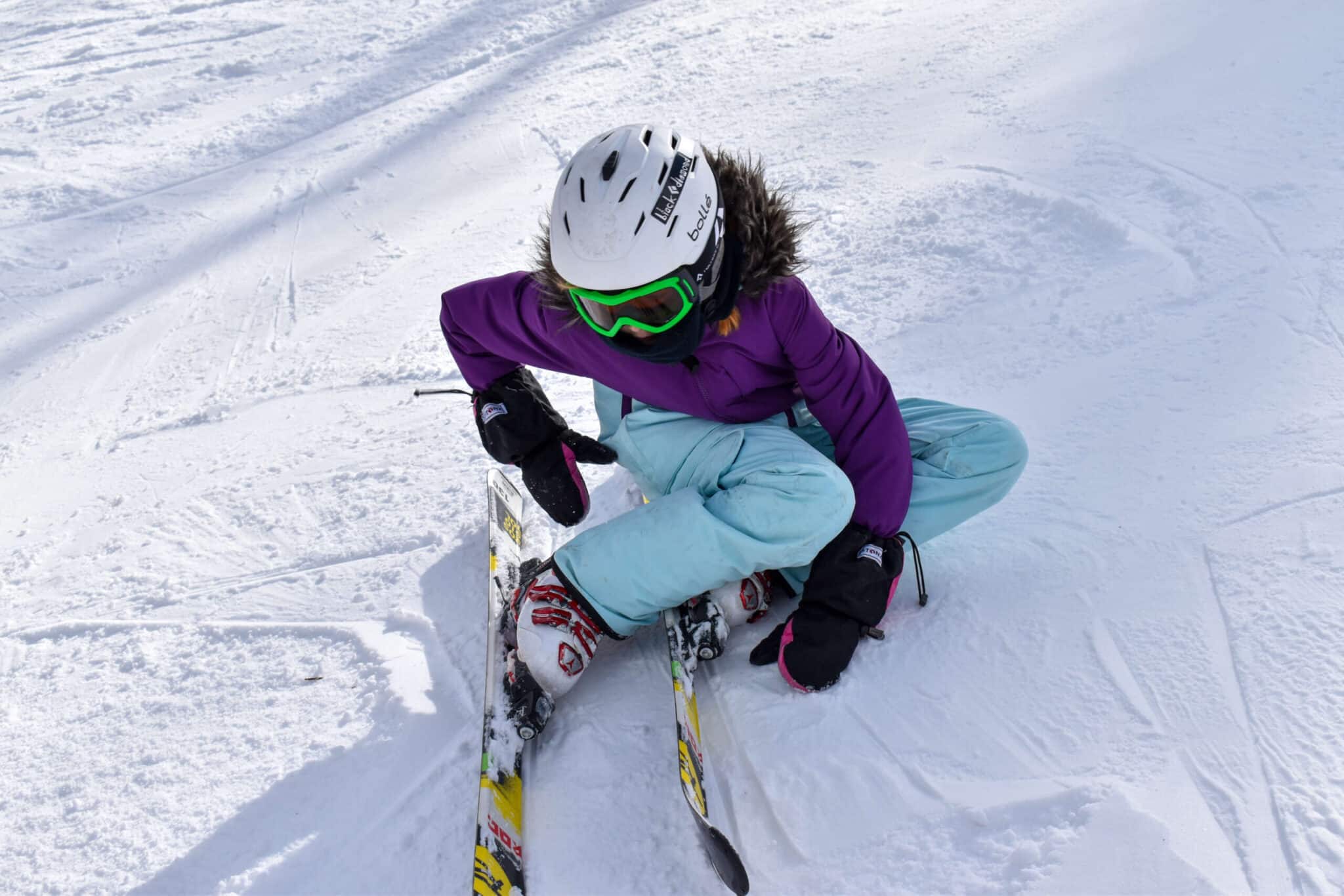
I can’t tell you how many parents I’ve seen drag their terrified child straight to the chairlift on day one, expecting them to just figure it out. Slow down. Before you even think about a hill, spend real time on flat ground. Let them walk around in their boots (yes, it’s awkward, that’s the point). Let them click in and out of their skis a dozen times. Have them shuffle around, feel the skis slide, maybe even fall over once or twice on purpose so they know it’s no big deal.
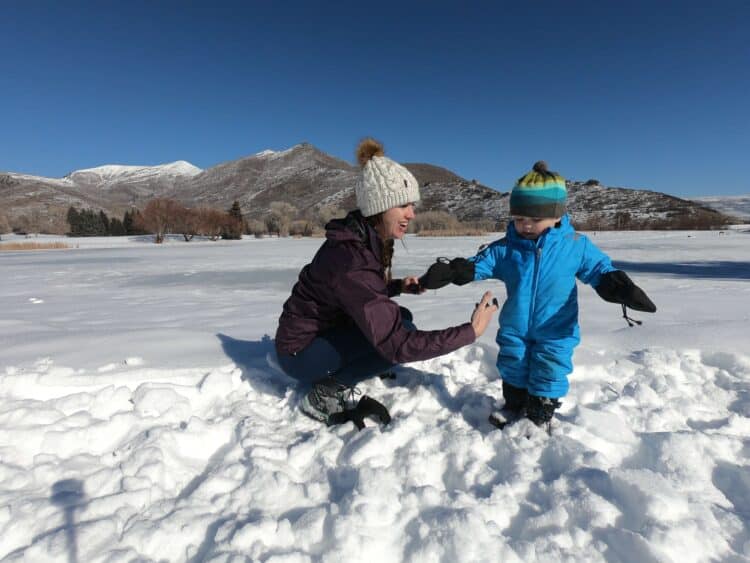
With my own kids and students I teach, we often spend the entire first morning just playing in the snow at the base area. No lifts, no slopes—just getting comfortable existing in ski gear. My third child needed two full days of this before he’d even consider the magic carpet. And you know what? Once he was ready, he did amazing.
Pick the quietest, gentlest slope you can find. Crowds make nervous kids more nervous. If you can swing it, go on a weekday morning when the bunny hill isn’t packed with ski school groups.
READ: Best Age to Teach Kids to Ski
The Chairlift Is Usually the Real Villain
Here’s something I tell every parent: your kid might be fine skiing, but terrified of the chairlift. And honestly? That’s totally valid. Chairlifts are weird! You’re dangling in the air with your feet hanging free, and then you’re supposed to gracefully dismount on a moving platform while wearing slippery equipment.

Before their first real ride, I walk kids through the entire process while standing on solid ground. We practice sitting down together, I show them exactly where to put their hands, and we talk about what the lift operator will do. Then—and this is key—I hold onto their jacket or arm as we load, every single time for the first few rides. It gives them something solid to focus on.
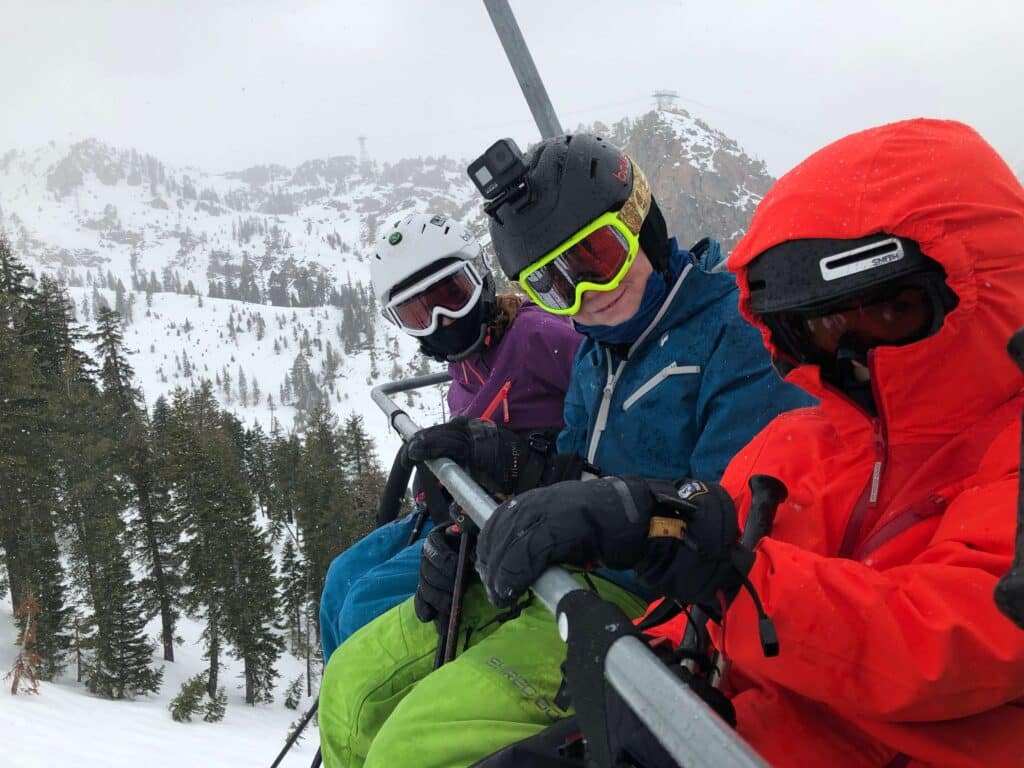
During the ride up, I don’t make a big deal about the height or the scary parts. Instead, we play simple games: “I spy,” counting how many people are wearing blue helmets, or looking for animal tracks in the snow below. My go-to trick? I always have Tic Tacs or M&M’s in my pocket. A little treat during the ride turns it into something they look forward to instead of dread.
Your Energy Sets the Tone (Even When You’re Freaking Out Inside)
I’m going to be real with you—watching your own child struggle or cry on the mountain is hard. With other people’s kids, I can stay calm and encouraging all day. With my own? I’ve had to bite my tongue more times than I can count when I want to either push them harder or just give up and go home.
But here’s what I’ve learned: kids are little emotional mirrors. If you’re tense and anxious about whether they’ll succeed, they feel it. If you’re frustrated when they fall for the tenth time, they internalize it as failure.
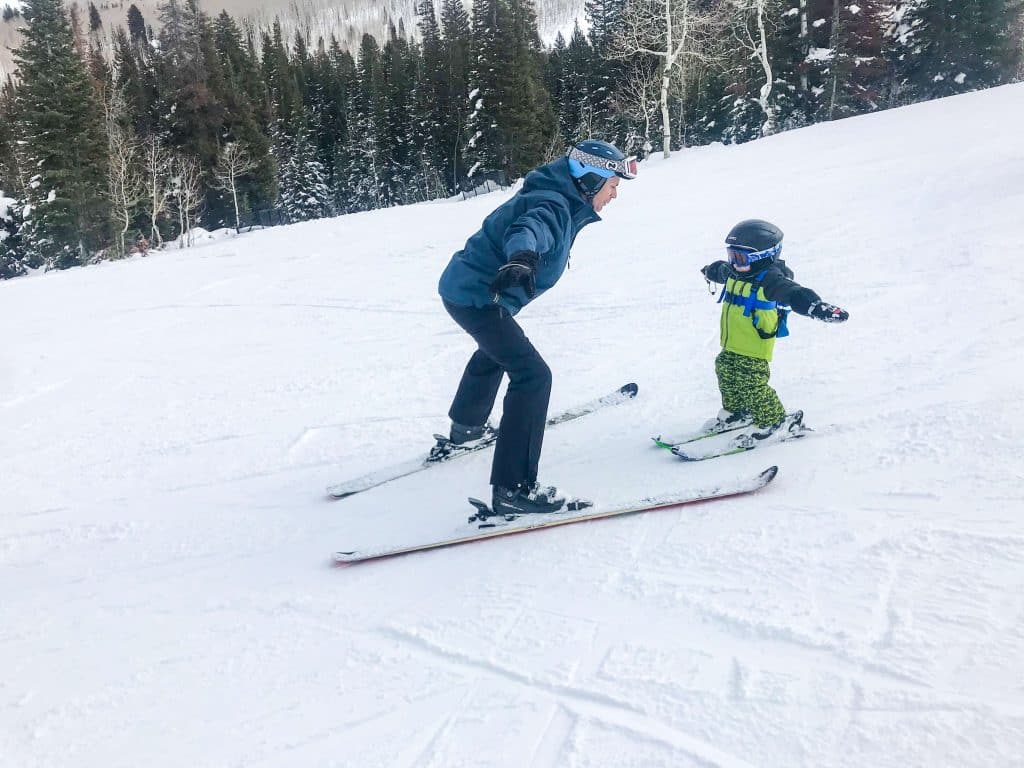
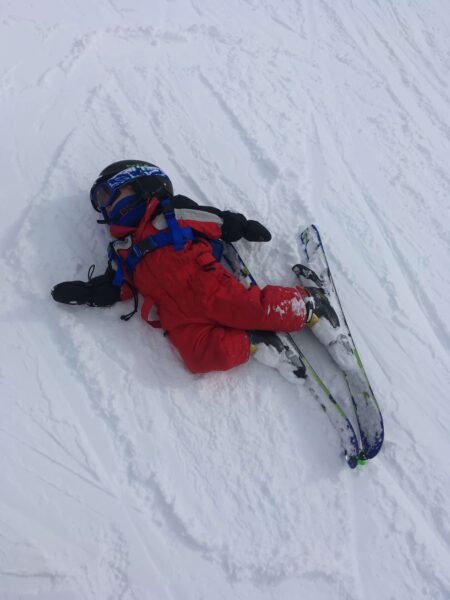
So even when my youngest sat down in the middle of the run and refused to move (which happened more than once), I kept my voice light. “Okay, taking a seat! Need a minute? That’s cool. Check out that awesome snowboarder over there.” After a few minutes, we’d try again. Some days, we only made three runs before heading in for hot chocolate and then back home, and I had to be okay with that.

Celebrate everything. And I mean everything. “You stood up all by yourself after that fall!” “You made it all the way down without stopping!” “Look how you turned your skis into a pizza—that was perfect!” The wins don’t have to be big to matter.
READ: Tips For Teaching Toddlers to Ski
Progress Looks Different for Every Kid
I have five kids, which means I’ve had five completely different skiing journeys (in addition to the hundreds of kids I’ve taught as an instructor). One of mine was doing blue runs by age four. Another didn’t feel comfortable leaving the bunny hill until age six. Both are great skiers now, but they needed totally different timelines.
The comparison trap is real, especially when you see other kids zooming past while yours is barely making it down the green run. Resist it. Your kid’s journey is their own, and pushing them past their comfort zone too fast is the quickest way to make them hate skiing.
Share your own struggles. I always tell kids about the time I caught an edge and yard-saled all the way down a run (skis, poles, and dignity scattered everywhere). Or when I was so scared of moguls that I’d take off my skis and hike around them. It helps them understand that everyone, even instructors, even their parents, had to start somewhere.
Group Lessons Can Be Magic (But They’re Not for Everyone)
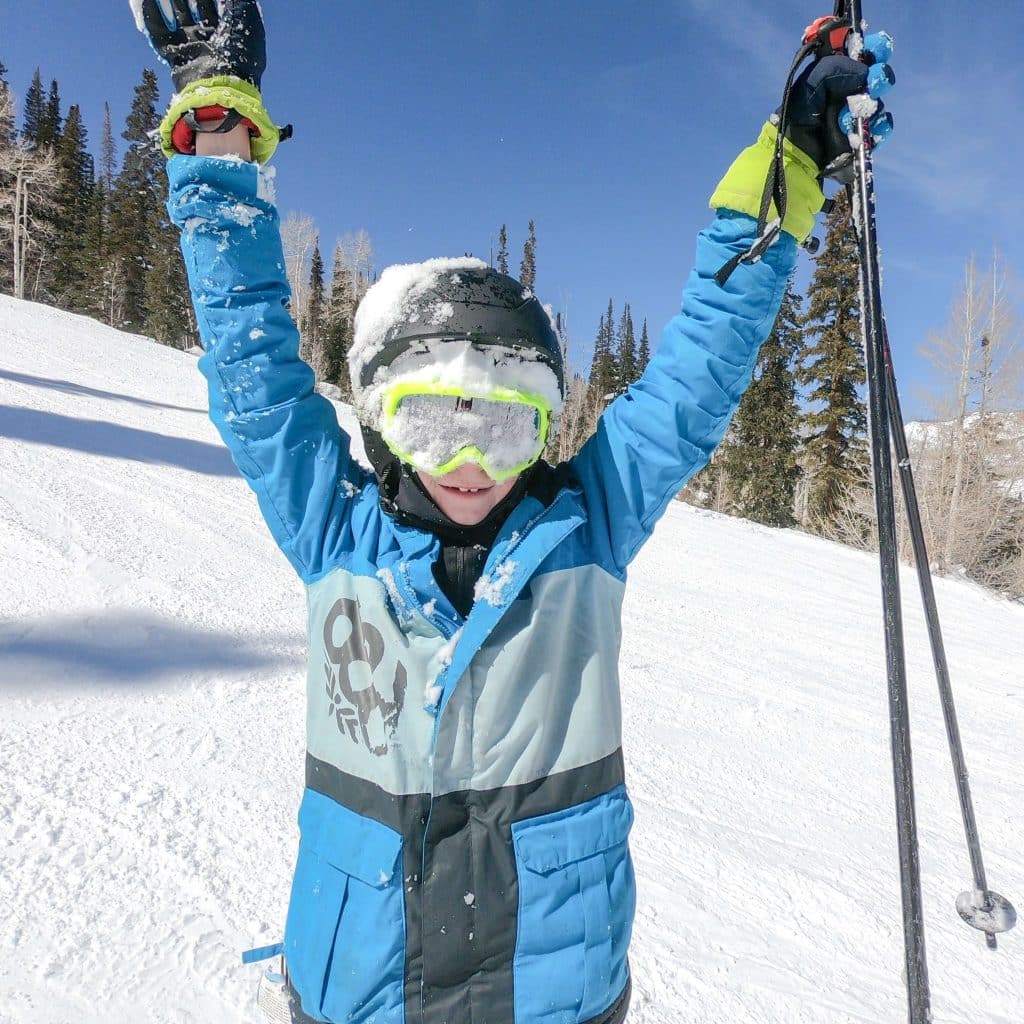
One of the best things about group lessons is that kids see other kids struggling and surviving. It normalizes the fear. Plus, a good instructor knows tricks that you might not (and sometimes kids listen better to someone who isn’t their parent…shocking, I know).
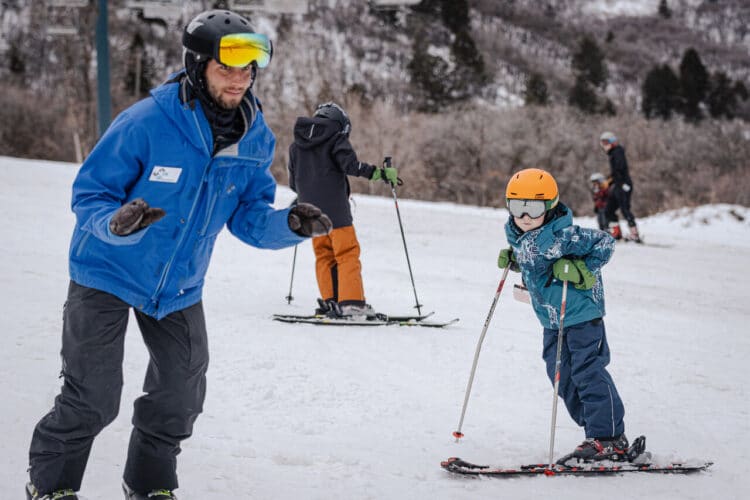
That said, I’ve also had kids who absolutely shut down in a group setting. My second child was so overwhelmed by ski school that we pulled her out after the first day and I taught her myself. It took longer, but she needed that one-on-one attention and the ability to stop whenever she was feeling maxed out.
If you’re teaching your own child, remember that you need to switch from “parent mode” to “instructor mode.” That means patience you didn’t know you had and biting back any frustration when they’re not getting it. It’s hard, but it can also create incredible bonding moments.
Make the Mountain About More Than Just Skiing
Sometimes the pressure to “ski well” is what makes kids anxious. Take that pressure off. Skiing doesn’t have to be serious.

Play games on the slope (check out our favorite games for teaching kids to ski). “Can you make the biggest snow spray when you pizza-stop?” “Let’s see who can do the silliest dance move while skiing.” “Race me to that tree!” (Let them win.) My kids loved trying to follow my tracks exactly, turning it into a game of follow-the-leader.
Build in rewards that have nothing to do with skiing ability. Hot chocolate breaks aren’t just for when they’ve mastered something—they’re for trying hard. Same with letting them pick where to eat lunch or promising a swim in the hotel pool after a good effort day.
Face the Specific Fears Head-On (Gently)
When a kid says they’re scared, don’t dismiss it. Ask what exactly scares them. Is it going too fast? Falling? The steepness? The chairlift? Each fear needs its own solution.
Scared of speed? Practice turning more often to control pace. Show them how to hockey-stop or use their edges. Let them traverse back and forth across the slope instead of pointing straight down.

Scared of falling? Fall down on purpose together. Show them it doesn’t hurt (much) and that getting up is a skill you can practice. I’ve literally sat in the snow with kids and practiced pushing ourselves back up until it became routine.
Scared of steep slopes? Don’t go there yet. Stay on terrain where they feel confident until that confidence builds naturally. And when you do move up, pick the easiest version of the next level—the mellowest green-blue run, not the steepest green.
Patience Isn’t Just a Virtue—It’s the Whole Game
Some days, you’re going to spend two hours getting your kid ready, drive to the mountain, park, walk to the lift, and have them last exactly one run before they want to quit. That’s $200 for a single trip down the bunny hill. It’s frustrating.
But here’s the thing I tell parents (and remind myself constantly): every experience on the mountain is building something, even if it doesn’t look like progress. The kid who only makes two runs today might surprise you next week by asking to go again. The one who cries getting off the chairlift might be laughing on it a month from now.
I’ve seen kids who I was sure would never ski end up on the race team. I’ve also seen naturally athletic kids quit because someone pushed too hard, too fast. The difference is almost always about respecting their pace and keeping it fun.
Your job isn’t to create an Olympic skier. Your job is to help them find the fun in getting down the mountain, whether that takes one season or five. Trust the process, celebrate the tiny victories, and remember—the hot chocolate at the end tastes just as good whether they mastered parallel turns or just made it down the bunny hill without tears.
You’ve got this. And so do they.