

This post may contain affiliate links where we earn from qualifying purchases from referring you to our favorite products and brands. As an amazon associate, we earn from qualifying purchases. Find out more in our disclosure.
The First 3 Days on the Mountain Change Everything
If you’re a ski parent who has ever had a rough first day on the mountain with your kids, you already know the feeling. The meltdown before lunch. The drive home where nobody talks. The quiet worry that maybe skiing just isn’t for your family.
But here’s what I want you to know: it’s usually not about your kid. It’s about those first three days, and whether they were set up the right way.
I’ve been a ski instructor for over 20 years. I’m also a mom of five, and I taught all of them to ski before they turned three. And the number one thing I see parents get wrong when they start skiing with kids is treating those early days like a test run instead of a foundation.
They’re not a test run. They’re identity builders.
When Kids Start Learning How to Ski
When adults learn something new, we’re pretty good at separating how we’re performing from who we are. We think, “I’m not good at this yet.” Kids don’t think that way. By the end of Day 1, your child has already started forming a belief about themselves on the mountain.
Am I a skier? Do I belong here? Can I actually do this?
If those first days feel chaotic, rushed, or overwhelming, the answer their brain lands on is “this isn’t for me.” And once that identity sets in, you’re no longer teaching skiing. You’re fighting resistance.
That’s why how you structure those first three days matters so much more than which run you take or how many laps you get in.
A Look At Those First Days of Skiing with Kids
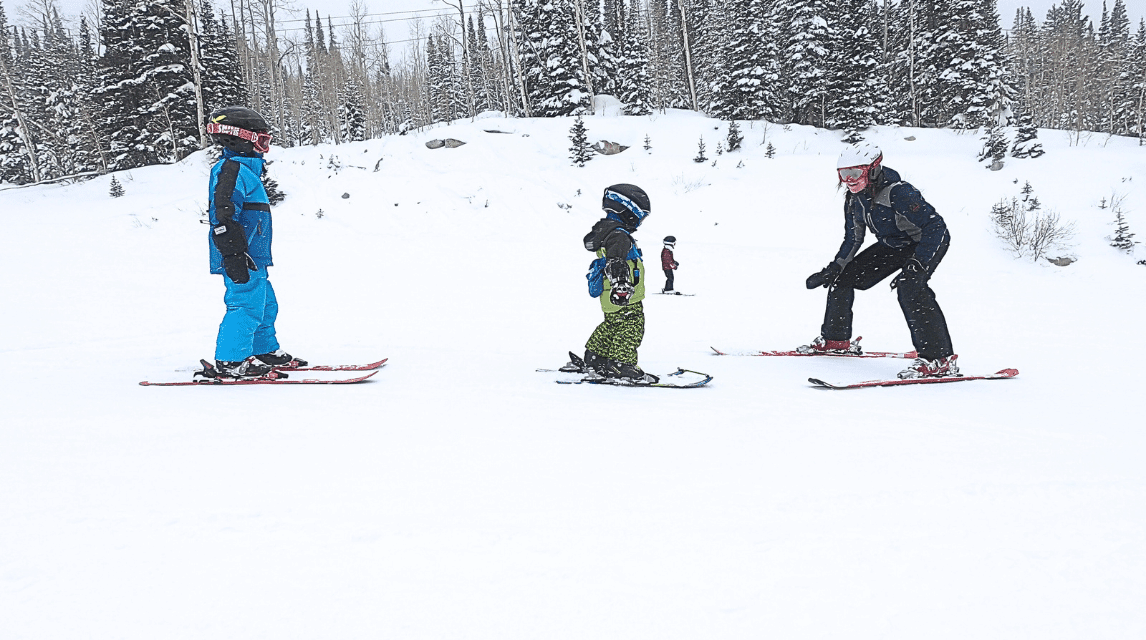
Day 1 should look almost boring to adults. Short slides on flat ground. Falling on purpose. Getting back up. Laughing. The magic carpet. Ending the day before anyone is tired or frustrated.
I know that sounds underwhelming when you’ve paid for lift tickets and driven two hours. But what’s happening underneath that “boring” surface is everything. Your child is learning: I can control this. I can fall and it’s okay. My body knows what to do.
Day 2 builds on that with a little more control, some gentle turns, consistent stopping. Day 3 is where, if things have gone well and your child is genuinely ready, you might try a very easy green run. The word “if” is doing a lot of work in that sentence.
Rushing that progression is one of the most common ways parents accidentally undo all the good work they’ve already done. Respect the timeline and you build confidence. Push too fast and you build fear.
Your Kids Dont Need Expensive Ski Lessons
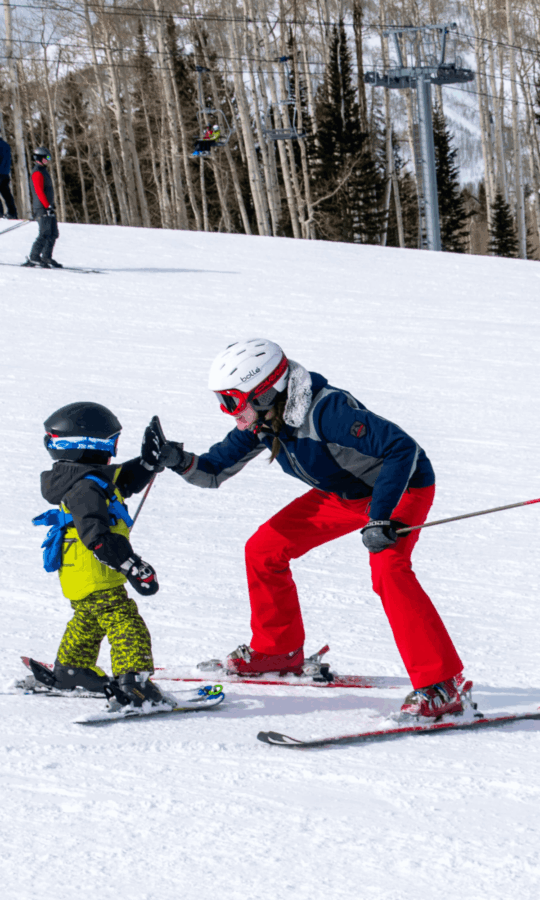
A lot of parents assume they need to hand their child off to a professional for those first days. And while kids ski lessons with a qualified ski instructor can be wonderful, they’re not the only path. Parents can absolutely build this foundation themselves. What you need isn’t advanced technique. It’s structure, patience, and the right progression.
Most parents were never taught how to structure those early days. That’s the gap, and it’s completely fixable.
“The first three days aren’t about creating a good skier. They’re about raising one.”
When you approach those early days as identity-building moments instead of skill checkboxes, everything changes. Your child starts to see themselves as someone who belongs on the mountain. Someone who can do hard things. And that belief carries them a lot further than any pizza wedge ever will.
That’s what family skiing tips are really about at this stage. Not technique. Connection, confidence, and coming back next weekend wanting more.
Resources and Links
If you want a step-by-step plan for how to ski with kids during those critical first days, I built First Tracks: A Parent’s Guide to Teaching Kids to Ski specifically for this. It walks you through Day 1, Day 2, and Day 3 in the right order so you’re not guessing.
For more on teaching children learning to ski, check out these articles on skiingkid.com:
- How to Know When Your Child Is Ready to Ski
- What to Do When Your Kid Refuses to Ski
- Gear Guide: What Your Child Actually Needs for Their First Days on Snow
Skiing with Kids Podcast Transcript
Welcome to Skiing with Kids : the podcast that helps you raise confident skiers and create ski days your family actually looks forward to.
I’m your host Jessica, and I’ve been teaching kids to ski for 20 years both as a ski instructor and mom of 5, and I’m someone who has been exactly where you might be right now.
Hey, welcome back. What we’re talking about today is something I genuinely wish more ski parents knew before they ever clicked their kid’s first boot into a binding.
The first three days of skiing with your kids are the most important and almost no one realizes this.
I want to speak to two groups today. If you haven’t taken your kids skiing yet and you’re in the planning stages, this episode is your roadmap. And if you’ve already had a rough first experience, a tough day, a tearful drive home, a kid who says they never want to go back, this is for you too. It’s not too late. I promise.
Let’s get into it.
Most parents go into skiing with kids with a We’ll see how this goes mindset, even though they’ve been looking forward to this trip for weeks. You’ve rented the gear, packed the snacks, wrestled those boots on in the parking lot (which, if you’ve done it, you know is its own Olympic event) and somewhere in the back of your mind you’re thinking, “We’ll see how this goes. If it’s messy, we’ll sort it out next time.”
That feels like a reasonable, low-pressure approach. But here’s what I need you to understand: those first three days aren’t test runs. They are the foundation that everything else is built on.
If that foundation gets shaky, if those early days feel scary or rushed or like your kid is constantly failing, you don’t always get a fresh start “next time.” What you get is a kid who wakes up on Day 2 a little less excited. Who drags their feet on Day 3. Who, by the end of the trip, says, “I don’t really like skiing.” Not because skiing isn’t for them. Because those early days weren’t set up the right way.
Here’s the thing that changes everything once you get it.
When adults learn something new, we separate performance from identity. We think, “I’m not good at this yet.” Kids don’t work that way. In those early, wobbly moments, they’re not just learning a skill , they’re deciding who they are.
Am I a skier? Do I belong here? Can I do this?
By the end of Day 1, your child has already started forming a belief about themselves on the mountain. And if Day 1 feels overwhelming and out of control, that belief becomes “This is overwhelming, I don’t like being overwhelmed, so this isn’t for me.”
Once that identity sets, you’re not teaching skiing anymore. You’re fighting resistance. That’s why I always say: the first three days aren’t about learning skills, they’re about helping your kid love being on the mountain with you.
Let’s dive into gear. SKi gear is weird, it’s clunky, bulky, stiff in weird places. It’s not what any kid would CHOOSE to wear.
Think about this from your child’s perspective. New boots. Skis that slide everywhere. Cold air. Loud lifts. Strangers flying past them. Goggles fogging up.
Their nervous system is on full alert before you even get on the snow. And if you add pressure on top of that “let’s get down the run, let’s keep up, you have so much to learn” their brain shifts into threat mode. And in threat mode, learning shuts down. The brain prioritizes survival over skill acquisition.
So to combat this, what you need to do is to help kids get used to their new gear before they ever get to the mountain. Put their goggles and helmets out with their toys so they can try them on. Walk around the yard in ski boots, Hang out and play a board game dressed in full outerwear. Anything you can do to make them feel more comfortable in theri gear can go a long way.
So instead of asking “How do I get them down the run today?”, ask “How do I help them feel safe in their body with all this gear?”
Now what should day 1 look like. Truthfully, Day 1 should look almost boring to adults. Sliding ten feet and stopping. Falling on purpose so they learn it’s not catastrophic. Getting back up. Laughing. Eating snacks in the snow. The magic carpet. Repetition. And then quitting early while they still want more.
Underneath that “boring” surface, your child is building physical confidence. They’re learning: I can control this. I can fall and get up. My body knows what to do. That is the foundation. When it’s solid, everything else comes naturally.
Now remember, during those first few days You’re Not Teaching Skiing. You’re Teaching Mountain Confidence.
This is the reframe I come back to constantly.
When the goal is to teach skiing, parents too quickly become correctors. Bend your knees. Hands forward. Pizza. Stop. STOP. It becomes evaluative, pressure-filled, and even with the best intentions, kids feel that. Nobody loves learning when they feel like they’re being tested.
But when the goal becomes build mountain confidence, when you want your kid to finish the day feeling capable and connected to you, everything shifts. You play games. You laugh at the falls. You take hot chocolate breaks not because you have to but because that moment is part of the memory. You quit while they still want more.
And here’s what’s wild: when you back off the pressure, the skills actually come faster. Relaxed kids learn so much more effectively than stressed kids. Fun is not a distraction from progress. Fun is how progress happens.
Now if you’re sitting here listening and thinking, “This makes sense, but what does this actually look like day by day?” that’s exactly why I created First Tracks: A Parent’s Guide to Teaching Kids to Ski.
It walks you step by step through Day 1, Day 2, and Day 3 – all they way up to parallel (in the right order, with the right progressions) so you’re not guessing and hoping for the best. Because guessing is what leads to meltdowns. Having a plan is what leads to a kid who asks to go back.
Find it at skiingkid.com and you can find the link in the show notes.
When we’re skiing with kids, in those early days, we’re trying to build momentum, but the thing is, Momentum Works Both Ways
After a hard Day 1, kids wake up less excited for Day 2. After a hard Day 2, they start resisting the boots. After a hard Day 3, you hear it: “I don’t want to ski anymore.”
Kids with a great first day, get more excited about day 2, and by day 3, they can hardly control their excitement. This is exactly what you want. And while it might seem counterintuitive because your child might not be learning TONS of ski skills or even getting on the chairlift, I can promise you that having that positive momentum in the early days will make everything else easier down the line.
Now what does the Progression Actually Look Like those first few days
Day 1 is all about comfort and play. Getting used to gear, sliding, falling on purpose, getting back up. They’ll do some gliding, maybe learn to ride the magic carpet. Keep it short and always End on a high note. For kids under 5, I recommend only going for 90 minutes, and for older kids a half day is usually great for day one.
Day 2 introduces a bit more control, such as learning some stopping, maybe starting to feel turns on the magic carpet or a gentle slope. Repetition is good here, even if it feels slow. All kids learn at different speeds, so at this point remember to take things slow, and be patient.
Day 3 is where, if the first two days went well and your child is genuinely ready, you’ll work more on stopping, speed control, and the basics of turning. Some kids might even be ready for the chairlift, but many won’t be. Don’t rush it. Make sure your kid is having fun, that you’re listening to them, praising how great they’re doing.
Now when you think about how basic those first few days are in terms of skills, you might not even need a ski instructor. Ski instructors are wonderful, but a lot of parents want to be the one building this foundation with their kid. They want those memories. And here’s what I want you to know: you can absolutely do this yourself.
You don’t need to be an expert skier. Those first three days don’t require advanced technique from you. They require structure, patience, the right progression, and emotional awareness. Most parents were never taught how to structure those days. That’s the gap — not ability, not athleticism, not your kid. Just a lack of a plan.
Skiing with your kids, especially in the early phases is about fun, playing games, creating connection. You want your child to know that they belong on the mountain and that skiing is for them. That confidence can be the most easily built in the beginning.
If you want those first three days to build that identity of confidence, connection, and a kid who can’t wait to go back, First Tracks: A Parent’s Guide to Teaching Kids to Ski is exactly what you need to be able to skip ski school and help your kid in your own. Considering that the average ski school costs about $300/day in the US, learning how to teach your own kids is a no brainer.
Inside is the structure most parents never get, laid out step by step so you walk into Day 1 with a plan instead of a hope and a prayer.
Grab it at skiingkid.com at the link in the shownotes.
And honestly? The fact that you’re here listening to this means you’re already doing it right. Your kid is lucky to have a parent who cares this much.
Those first three days aren’t about creating a good skier. They’re about raising one. They’re about your child looking at a mountain and thinking: I can do this. I belong here.
And that belief starts on Day 1.
See you on the mountain.