

This post may contain affiliate links where we earn from qualifying purchases from referring you to our favorite products and brands. As an amazon associate, we earn from qualifying purchases. Find out more in our disclosure.
Moving kids to harder terrain before they’re ready is the number one mistake I see ski parents make. And I’ve watched it play out hundreds of times over 20 years of teaching children to ski.
Here’s what it looks like. A kid spends the morning in ski school absolutely ripping on intermediate terrain — confident, happy, having the time of their life. That same afternoon, a parent takes them down a black diamond. And that kid goes home in tears saying they hate skiing.
It happens more than you’d think. And it doesn’t just sting in the moment. It can set a child’s relationship with skiing back by an entire season.
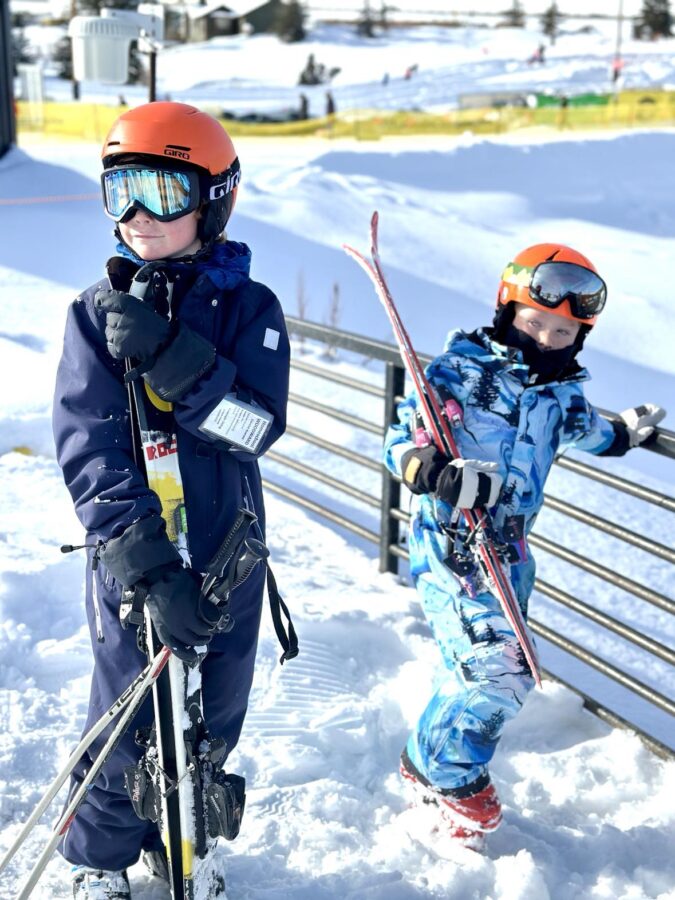
Skiing with kids is a long-haul game, and the shortcuts always cost you. When kids move to harder terrain too soon, it doesn’t just expose their weaknesses — it resets them. The solid parallel turns disappear. The hockey stop turns back into a pizza wedge. Your patience now will pay off for years. Here’s how to know when it’s actually time to move up.
5 Questions to Ask Before Kids Ski Harder Terrain
Before you bump up the difficulty — whether that’s green to blue, easy blue to hard blue, or blue to black — run through these five questions first.
Have their skills improved over the past few weeks? Not just “can they ski,” but are they actually getting better? If progress has stalled, more time on familiar terrain is the right call. I always tell parents: overtrain before you over-terrain.
Is your child happy on the terrain they’re on right now? If there’s still anxiety or reluctance on their current terrain, moving up is going to amplify those feelings, not fix them.
Does your child still think skiing is fun? This is the most important one. That positive relationship with skiing is the thing you are protecting above everything else as a ski parent. If it’s starting to erode, back off and rebuild before adding harder terrain.
Do they need more ski days under their belt? Skills with kids don’t develop on a linear timeline, and there is zero shame in more days on the same terrain. Those extra laps are building something, even when it doesn’t look like it yet.
Does your child seem like they’re being pushed too hard? This is the gut-check question. Kids will tell you — with their words or their body language — when they’ve hit their limit. Ending the day early is always better than pushing past the point where skiing stops being something they want to do.
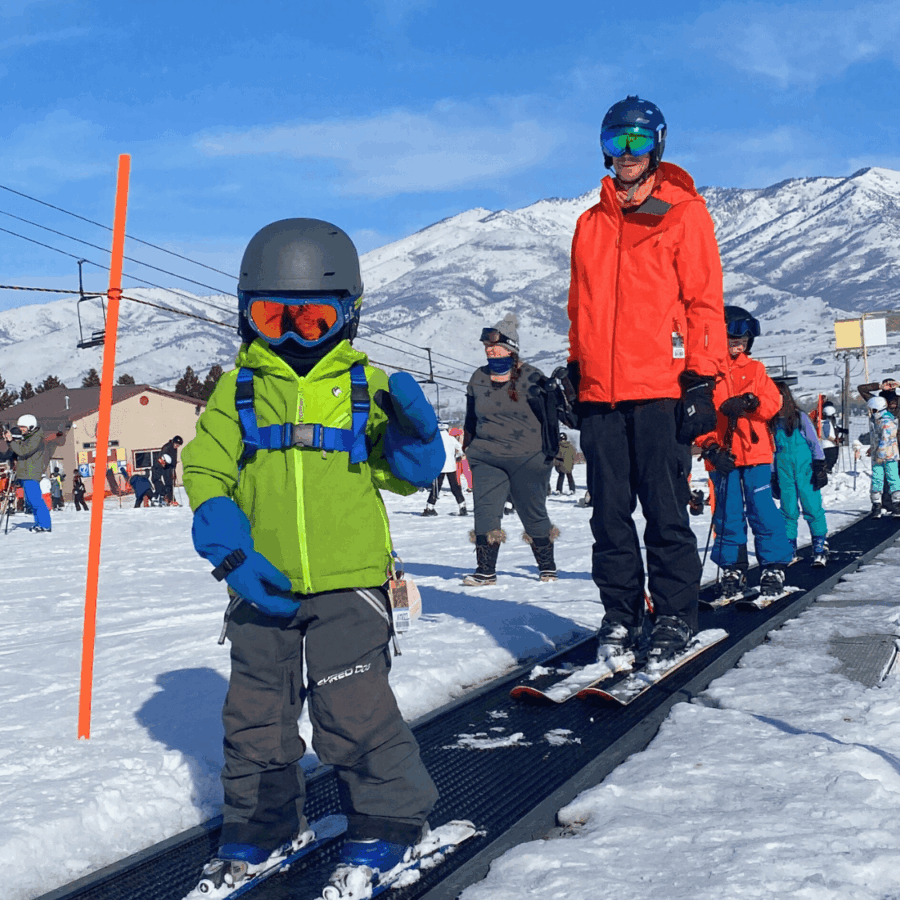
The Ski Terrain Progression
Before leaving the beginner hill, every child needs three things: the ability to stop, turn, and get up after a fall. Don’t rush it. For some kids this takes a few days, for others a full season. Every minute of that time builds the foundation for everything that comes after.
Before moving to blue terrain, the most important skill to have in place is side slipping — sliding down a slope sideways in a controlled way by adjusting edge angle. It’s simple to learn and a critical safety tool for when terrain gets unexpectedly steep.
Before tackling hard blues, your child needs a solid hockey stop and basic parallel turns. Steep terrain simply doesn’t work in a wedge, and no child should be attempting a hard blue without these skills in place.
Before skiing a black diamond, the physical checklist is real — solid parallel turns, proper pole planting, and the ability to get back up and hike uphill after a hard fall. But the biggest requirement isn’t physical at all. It’s self-confidence. A child needs to genuinely believe in their own ability before they’re up there. Dragging a kid onto a black before they feel ready doesn’t build confidence. It usually does the opposite.
The Bottom Line
Moving your child to harder terrain is the natural result of building skills in the right order, at the right pace, on the right terrain. When you rush it, you get tears and resistance and kids who stop wanting to come back. When you’re patient and intentional, you get a kid who stands at the top of a black diamond someday and feels like the mountain belongs to them.
Resources and Links
If you want a complete roadmap for teaching your kids to ski — including exact progressions and skill benchmarks at every level — check out First Tracks: A Parent’s Guide to Teaching Kids to Ski at skiingkid.com.
For more family skiing tips, check out these articles:
- Teaching Your Own Kids to Ski
- Teaching Kids How to Stop on Skis
- How to Properly Use a Kids Ski Harness
Skiing with Kids Podcast Transcript
Welcome to Skiing with Kids. I’m your host Jessica, a ski instructor, mom of five, and someone who’s seen just about every ski day meltdown that you can imagine. After 20 years of teaching kids on the mountain, I’ve learned that great ski days aren’t about perfect technique. They’re about confidence, connection, and knowing what actually works. And this podcast is where we break it all down.
Today’s episode is one that I wish someone had handed me before I started this whole wild journey of skiing with my kids, because one of the biggest mistakes I see parents make on the mountain — and I’ve made this mistake myself — is moving kids to harder terrain before they’re actually ready for it.
First off, please know that I am someone who has spent a truly embarrassing number of days on beginner terrain waiting for kids to be ready for the next thing. This is both my own kids and all the hundreds of kids that I’ve taught in ski school as an instructor. And I want to be really clear about something upfront. I am not just gearing this towards beginner kids. Moving kids to harder terrain too quickly applies at every level. We’re talking green to blue, easy blue to hard blue, blue to black. Every one of those transitions has a timing piece that parents often completely underestimate. So today we’re going to walk through exactly how to know when your kid is ready to move up. I’ve got five questions I want you to ask yourself, as well as a breakdown of what skills need to be in place at each level before you make that jump.
Now let’s talk about the biggest mistake I see, because I want to start here because it actually matters. The number one mistake I see parents make — and I’ve watched this play out hundreds of times over my 20 years of teaching kids to ski — is introducing kids to terrain that’s too hard, too soon. I’ve had students who were absolutely ripping on intermediate terrain. Confident, happy, having the time of their lives. And that same day a parent takes them down a black diamond, and that kid goes home in tears saying I hate skiing. This is stupid.
It happens more often than you think, and it’s not because the parent doesn’t care. Often it’s because the parent is excited and proud and honestly probably a little desperate to ski something more challenging. I get it. Between my five kids, I spent the better part of 13 years skiing beginner terrain. There are days it was genuinely mind-numbing. I have been tempted more than once to just drag one of them down a harder run so I could actually get some real skiing in. The only time I was actually getting real skiing in was when we were dividing and conquering — skiing with the older kids, or when my husband and I were tag-teaming and he was with the kids on the learner terrain while I took some runs by myself. There is a way to make it work, but taking your kids along on terrain they’re not ready for is not the answer.
In all that time on beginner terrain, here’s what I learned. Skiing with kids is a long-haul game, and the shortcuts always cost you. When kids move to harder terrain before they’re ready, not only do their skills take a hit, but so does their confidence. A kid who had solid parallel turns on easy terrain suddenly can only wedge on a steeper slope. Maybe your kid had a great hockey stop on intermediate terrain and suddenly is back in a pizza on a steeper mogul run. Harder terrain doesn’t just expose their weaknesses. It resets everything. And now you’ve got a kid who’s scared, frustrated, and questioning whether they even like skiing. So before we get into anything else, I want you to internalize this: your patience as a parent will pay off for years.
Okay, so how do you actually know when your kid is ready to ski something harder? Here are five questions I want you to run through before you try to take them to the next level.
Question number one: have their skills improved over the past few weeks? I know this sounds obvious, but it’s worth starting with. Not just can they ski, but are they progressing? Are they getting better? Are you seeing improvement? Because if their skills have plateaued, adding something harder isn’t going to unlock progress. It’s actually going to create frustration. Progress on easier terrain is a signal that they are building toward something. If their progress has stalled, the answer is more time, not harder runs. I always tell parents to overtrain before you over-terrain.
Question number two: is your kid happy skiing the terrain they’re on right now? This one matters more than most parents realize. If your kid is still struggling emotionally on the terrain they’re on — if there’s still anxiety, resistance, or reluctance — moving harder isn’t going to fix that. It’s going to amplify those problems. A kid who is genuinely happy and comfortable on green terrain is ready to think about blues. A kid who is still white-knuckling it on the greens is not ready for something harder.
Question number three: does your kid still think skiing is fun? Even if they’re frustrated sometimes, even if there are challenging moments, do they still fundamentally love it? Are they asking to come back? Are they excited about the mountain? That is your green light. That positive relationship with skiing is the most important thing you are protecting as a parent. If it’s still intact, they have room to grow. If that’s starting to erode, you need to back off and rebuild before you push them to harder terrain. I say this all the time and I believe it with my whole heart — if skiing is not fun, you’re doing something wrong. The whole point of getting out there with your kids and your family is to have fun and make awesome memories. If they’re not having fun, you need to change how you’re doing things.
Question number four: do they need more ski days under their belt? Sometimes it is just about more time on snow. Skills don’t always develop on a linear timeline with kids. Some kids need a lot of repetition before something clicks, and that’s okay. There is no shame in more days on the same terrain. Those days are building something even if it’s not obvious in the moment. Think about other developmental things with kids. Not every kid learns to read at six years old. Some kids don’t learn until they’re eight. Some learn at three or four. We don’t think there’s anything wrong with the kids who take longer. We just know that all kids develop differently, and skiing is the same way.
Question number five: does your child seem like they’re being pushed too hard? This is the gut-check question, and I want you to answer it honestly, even if the answer is uncomfortable. I’ve had to face that reality myself with my own kids. Are they telling you they’re done? Are they shutting down? Are they just going through the motions but clearly not enjoying it? Kids will usually let you know — either with their words or their body language — when they’ve hit their limit. Listen to them. It is so much better to end the day a little early than to push past the point where skiing stops being something they want to do.
Now let’s talk about the terrain progression, because I want to get really specific about what skills belong where. Knowing your kid is ready in theory is one thing. Knowing what they actually need to be able to do to move up is totally different. And as parents, so many of us learned to ski years ago — often so long ago that we don’t really remember the steps. I remember pizza, I remember french fries, I moved to harder terrain. The end. There are so many steps in between, and I’m going to do a quick walkthrough of the skill benchmarks at each level. But I have all the exact progressions, step by step, including dozens of modules and over a hundred infographics, in my course First Tracks: A Parent’s Guide to Teaching Kids to Ski. You can find it at skiingkid.com — just click the First Tracks button.
Before a child ever leaves the bunny slope, they need to be able to do three things: stop, turn, and get up when they fall. That’s it. I know it sounds simple, but don’t rush it. Your kids need to be solid on all three before moving on. For some kids, mastering those basics takes just a few days. For others, it might take an entire season. We started most of our kids at 18 months old, and most of them took two seasons to really master these basics. But every minute of that time built an incredible foundation. Let your kids know there’s no rush and there’s no timeline they’re supposed to be on. A lot of resorts offer beginner-only lift passes, and those are perfect for this phase — no pressure to justify the cost by skiing more terrain than they’re ready for.
Once your kids are solid on stopping and turning on the bunny hill, the goal is to gradually introduce them to harder green terrain, because not all greens are equal. They need to learn how to make big and small turns, avoid obstacles, and control their speed both with their wedge and with their turns. Kids at this stage should be working on linking their S-turns together and starting to match their skis just a little bit between turns.
When kids are ready to try their first easy blue, the most important skill to have in place — beyond controlled wedge turns — is side slipping. There is so much variability in blue terrain that having this skill in your back pocket means you can get your kid down any sticky situation. Side slipping is exactly what it sounds like: standing sideways on the slope, parallel to the fall line, and sliding down in a controlled way by adjusting your edge angle. You engage the uphill edge by pressing your knees into the hill, and you release it slightly to let yourself slide. It’s a simple skill to learn, but it is a critical safety skill before your kid ever sets foot on terrain that could get steeper or icier than expected. Here’s how I teach it: stand sideways on the slope, skis parallel, press your knees uphill. The edges bite and you stop. Release your edges slightly by moving your knees just a tiny bit downhill. The edges disengage and you slide. Practice it in a few different positions until it feels comfortable.
Beyond the physical skill, the green-to-blue transition is also really mental. Your kid is about to ski something labeled differently than what they’ve been on, and for some kids that label alone is a big deal. One of my kids jumped right onto blue terrain without blinking. Another had completely solid skills for months but was mentally terrified of anything with a blue square on it. Both responses are completely normal. The goal is to keep it positive and let them lead as much as possible. Easy blue terrain is also a great place to start introducing beginning parallel turns and wedge christies — this is where the fun really starts to build. One important note: if your child hits a blue and immediately starts pointing straight downhill in a big wedge without turning or stopping, get them back to easier terrain right away. That is a safety issue for them and everyone else on the mountain.
From easy blue to hard blue is the first real jump in terrain difficulty. The biggest shift here is that you simply cannot get down in a wedge anymore. Steep terrain demands parallel skiing because the physics don’t work otherwise. Before moving your kids to a hard blue, they need a solid hockey stop and the ability to turn with skis parallel. Their form doesn’t have to be perfect, but they need to have been taught those skills on easier terrain and have enough command of them that they can deploy them when things get steep. A quick note on trail maps: they don’t tell you how steep a blue is. A blue at one resort might be gentler than an easy green somewhere else. Do your homework. Ask ski patrol, ask the ski school desk, ask someone who knows the mountain. When in doubt, ski the easier option — or better yet, ski the run yourself before taking your kids down it. And make the hockey stop a game. Kids love measuring their spray, especially if they can get the snow over mom’s head. Whoever has the biggest spray wins. It’s genuinely fun and it builds a skill that pays off for years.
Moving from blue terrain to a black diamond is the transition that takes the longest, and it should. Getting a kid ready for black diamonds typically takes years, not days or weeks. The physical skills needed are real: solid parallel turns on steep terrain, proper pole planting on both groomed and off-piste runs, the ability to hike uphill alone and put their own skis back on after a hard fall on a steep slope, and fast enough reaction time to avoid hazards. But the biggest thing — and I genuinely believe this — is self-confidence. The mental leap from a hard blue to a black diamond covered in moguls is significant. Your kid needs to genuinely believe in their own ability before they’re up there. Dragging a kid onto a black diamond before they feel ready doesn’t fast-track that confidence. It usually does the opposite. When my oldest skied his first black diamond, I felt like every single year of patience had been completely worth it. And just in the last year or two, we’ve gotten to the point where all five of our kids can ski the entire mountain. It is the most incredible feeling. Put in the work. The payoff is remarkable.
When your child has the skills and it’s time to try something harder, how you ski it together matters. Go slow. Wait for them often along the way — not at the bottom of the run, but frequently all the way down. A child navigating unfamiliar terrain who looks up and sees their parent a quarter mile below feels very alone on that mountain. Stay close. Ski in segments. Follow the leader works incredibly well on new terrain. Have them focus on following your line instead of scanning the whole slope. They don’t have to think about how steep it is. All they have to do is follow you. Then when they get to the bottom, make them stop and look up. Say: look what you just skied. That is a confidence-building moment that sticks.
Here’s what I want you to take away from this episode. Moving your kid to harder terrain is not a destination. It’s a natural result of building skills in the right order, at the right pace, on the right terrain. When it’s rushed, you get tears and resistance and kids who stop wanting to ski. When it’s patient and intentional, you get a kid who gets to the top of a black diamond someday and feels like the mountain belongs to them.
If you are ready for a complete roadmap for teaching your kids to ski — including all the details on every skill kids need to move to the next level — grab my course, First Tracks: A Parent’s Guide to Teaching Kids to Ski. You can find it at skiingkid.com. The long-term goal is being able to ski the whole mountain together, anywhere, as a family. And the path there is built run by run, season by season, one level at a time. The payoff is worth it. I promise. I’ll see you out there on the mountain.